Andrew Ingber Joins Government Law Group as an Associate Attorney

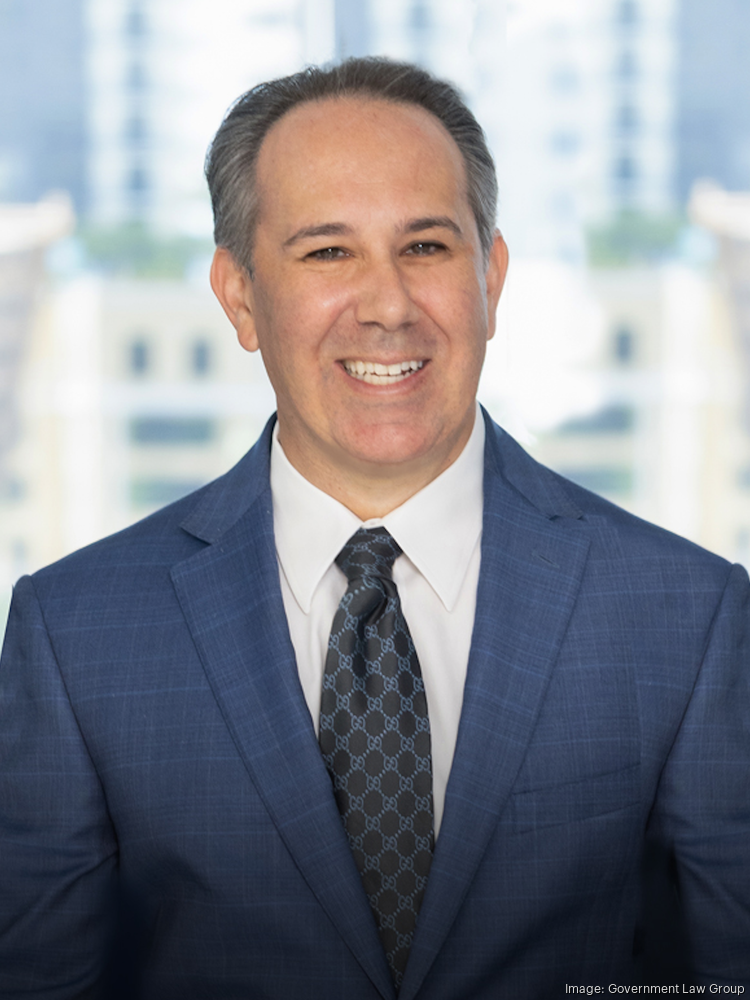
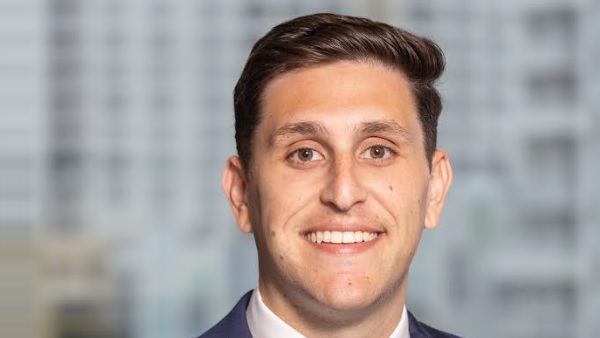
Andrew J. Ingber

Government Law Group (GLG) is pleased to announce that Andrew J. Ingber has joined the firm as an Associate Attorney. Mr. Ingber brings significant litigation experience and a commitment to achieving favorable outcomes for clients.

Mr. Ingber joins GLG after working at a large Florida law firm, where he successfully litigated high-exposure cases in the areas of premises liability, products liability, and pharmacy negligence for corporate clients.

Mr. Ingber received both his Juris Doctorate and undergraduate degrees from the University of Florida.

During law school, Mr. Ingber worked as a summer clerk to United States Magistrate Judge Alicia O. Valle, in the United States District Court for the Southern District of Florida. He also served as Vice President of the Levin College of Law Alternative Dispute Resolution Team and was a member of the Journal of Technology Law & Policy.

“We are thrilled to welcome Andrew to the GLG team,” said GLG Litigation Partner Jordan Isrow. “His diverse array of litigation experience and expertise in dispute resolution will be a tremendous asset to our clients, and we look forward to his contributions to the firm.”

Mr. Ingber brings with him a wealth of experience at both the state and federal levels. He will focus on commercial and governmental litigation at GLG, further strengthening the firm’s reputation for innovative and effective dispute-resolution strategies. With his addition to the team, GLG is well-positioned to continue to provide clients with exceptional legal representation and achieve favorable outcomes in even the most complex cases.

“I am honored to be a part of Government Law Group’s team, and I am excited to collaborate with my colleagues to find creative and effective solutions for our clients,” Mr. Ingber said. “I am committed to upholding the firm’s reputation for excellence and providing the best possible legal representation.”

In his spare time, Mr. Ingber enjoys spending time with family and friends, playing golf, and rooting for his favorite sports teams, including the Florida Gators.

Article Link: Andrew Ingber Joins Government Law Group as an Associate Attorney

New Florida affordable housing funding bill to spur massive redevelopment

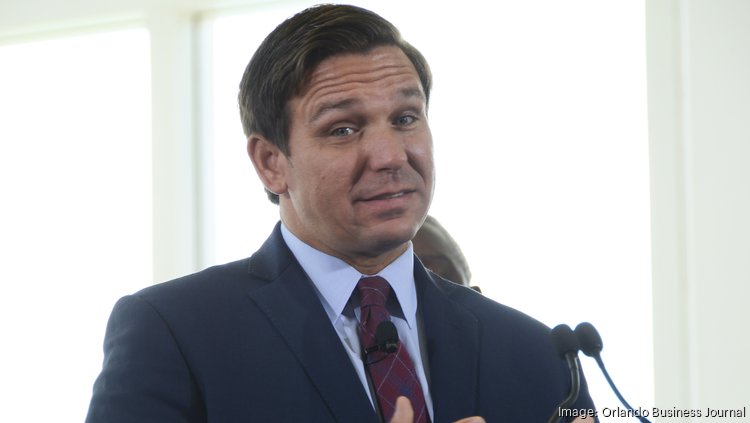
Florida Governor Ron DeSantis – JIM CARCHIDI

Florida Governor Ron DeSantis

A new bill signed by Florida Gov. Ron DeSantis that aims to spur development of affordable housing across Florida could lead to a wave of redevelopment of low-density areas.

The Live Local Act (SB 102) increases funding for affordable housing projects, makes it easier for developers to win approval for affordable housing in commercial districts, and prohibits government rent control.

Central Florida has become one of the least affordable housing markets in the nation over the last few years. A surge in migration from other states created frantic competition for homes and apartments, which drove up housing prices and rents.

“To have housing for teachers, police officers, firefighters, all these important things, you can’t do it if they have to drive an hour to work every day,” DeSantis said at the signing ceremony in Naples.

The Live Local Act was approved 103-6 in the House and unanimously in the Senate.

It contains $771 million in funding for affordable housing programs through the Florida Housing Finance Corp. (FHFC). That breaks down to $259 million for the SAIL programs with low-interest loans for developers; $252 million for the SHIP program with loans to developers in partnership with local government funding; $100 million to alleviate inflation-related costs for affordable housing projects; $100 million for Hometown Heroes to provide down payment and closing cost assistance to first-time homebuyers who work in law enforcement, firefighting, education, health care, child care or military/veterans.

It also created a sales tax refund of up to $5,000 on building materials for affordable housing projects funded by FHFC.

“This is transformative,” said David O. Deutch, a partner at Miami-based Pinnacle, one of the largest affordable housing developers in Florida. “There is now a certainty of funding and an iron-clad commitment to affordable and workforce housing in the state.”

The Florida Housing Finance Corp. always has more projects seeking funding than it has money to award, so this act means more projects will obtain funding and move forward. Additionally, Pinnacle can seek out more projects because it has a higher chance of winning funding, he said.

Right now, a lot of worthy affordable housing projects in Florida were stuck because Florida Housing Finance Corp. funds weren’t available and the cost of construction has increased, he said. Those projects are now more likely to move forward.

The extra funding will help developers build affordable housing amid a challenging environment with increased construction costs and higher interest rates that make loans more expensive, said Brian Sidman, founder of Miami-based BAS Holdings, which builds workforce and affordable housing through its subsidiary Redwood Development Co. He’s going to ramp up his development team to take advantage of the new law and meet the overwhelming demand for affordable units.

“We have a significant housing crisis and we need a lower cost of capital and changing zoning in certain areas to allow for workforce development to come in.”

The Live Local Act preempts certain local zoning rules to make it easier for affordable housing developers to secure approval.

“The attainable housing law will immediately change the landscape of development in Florida,” said Keith Poliakoff, an attorney with Fort Lauderdale-based Government Law Group, which represents many developers. “For the first time I can recall in state history, the state government has overridden home rule and taken away the zoning and land use powers from local government.”

Under the act, a municipality must authorize a multifamily or mixed-use project in an area that’s already zoned for commercial, industrial or mixed-use if the developer agrees to make at least 40% of the residential units affordable housing or workforce housing for 30 years. That means the rentals would be for people earning up to 120% of area median income. This project would be approved by city administration without a zoning, land use change, special exception or comprehensive plan amendment, so the City Commission wouldn’t need to vote. If this is a mixed-use project, at least 65% of the building must be for residential.

The density allowed at such a project could be equal to the highest density allowed anywhere in the municipality where residential is permitted. As for height, the project could be as tall as any building within a one-mile radius in the same city, or three stories, whichever is taller. The developer could also reduce the number of parking spaces if the site is near a public transit stop.

Poliakoff said development dynamics will change across Florida and lead to developers seeking property in prime coastal locales to redevelop. For instance, the city of Hollywood has zoning and height restrictions that prevent the redevelopment of low-rise hotels on the beach into high-rise residential towers.

With this new law, he said developers could replace those hotels with a residential high rise containing the maximum density in Hollywood – 95 units per acre for a condo built on the ocean in the 1970s – and the same height. As long as 40% of the units are workforce housing, the city can’t deny the project, he said. Poliakoff noted the law has no limits on unit sizes, so the workforce housing units could be small studios and the rest of the project could be luxury apartments.

In Sunny Isles Beach, this law would allow redevelopment of the commercial centers on the west side of A1A with the same density as the condos on the beach, as long as workforce housing is included, Poliakoff said. The same goes for commercial areas in cities that have recently been resistant to more density.

He noted that some municipalities may struggle to afford infrastructure improvements to handle more dense development than they planned for.

“My clients are all looking to buy commercial, industrial and mixed-use properties that have significantly gone up in value because of this bill,” Poliakoff said. “Developers will make billions of dollars off this law and it will increase the amount of affordable and attainable housing in Florida.”

The Live Local Act will result in a wave of redevelopment, said Walter Duke, head of Fort Lauderdale-based appraisal and real estate consulting firm Walter Duke & Partners and chair of the Broward Workshop’s affordable housing committee.

There are many underutilized shopping centers and office buildings in locations that are functionally obsolete and could become affordable housing, he said. Older warehouses also could become affordable housing, he added.

“The days of building single-family subdivisions are over,” Duke said. “We need to go vertical. People will have to embrace density.”

Article Link: New Florida affordable housing funding bill to spur massive redevelopment
Author: Brian Bandell

Judge scolds Boca mayor, 2 council members in lawsuit over luxury beachfront home

The developer of a long-stymied beachfront luxury home proposed in Boca Raton has moved a big step closer to building it after a partial victory in federal court where the judge excoriated the mayor and two city council members for purported bias.

U.S. District Judge Rodney Smith ruled that Natural Lands LLC has a vested or absolute right to build the controversial four-story, 8,600-square-foot home at 2500 North Ocean Blvd.

City spokeswoman Anne Marie Connolly said she couldn’t comment on pending litigation but that once the city receives the judge’s final order, it will decide how to proceed.

Natural Lands first submitted plans for the proposed home in 2012 and, because of its size, got a variance in 2015. The city didn’t deny permission to build until 2019, said Dan Abbott, an attorney who represented the city at trial. Natural Lands then sued, alleging that city officials were biased and denied it due process by communicating privately about its merits in advance of their vote.

This was “a concerted scheme orchestrated at the highest levels of local government” to deprive Natural Lands of its right to build a home, its lawyer, Jordan Isrow said in closing arguments. Why? Political pressure resulting from strong public sentiment opposing private oceanfront development, he said in an interview.

“Just because you have good intentions, just because you’re trying to do right by your constituents or residents, you still have to follow the law,“ said Isrow, a Boca Raton native who also is a Parkland city commissioner.

A rendering of the four-story, 8,600-square-foot-home at 2500 North Ocean Blvd. in Boca Raton. U.S. District Judge Rodney Smith ruled that Natural Lands LLC has a vested or absolute right to build the house.

Opposition to home: Potential to endanger nesting sea turtles

Opponents of the planned home claim, among other things, its potential to harm sand dunes and disorient endangered nesting sea turtles and hatchlings. Natural Lands hired experts to address those sorts of issues, Isrow said.

Natural Lands also contended that the city’s actions were a “taking” or “inverse condemnation” of its property by limiting it to an “accessory use” such as a walkway or private beach.

“Without a clear and vested right, the property is not worth nearly as much as it would be with the vested right to build a single-family home,” Isrow said. Natural Lands paid $950,000 for the 0.3-acre lot in 2011, according to property records.

Isrow argued at trial that his client should be compensated by the city for depriving it of a more beneficial use of the property. The city’s attorney, Dan Abbott, countered that Natural Lands could still build on the site, but not in a way adverse to the environment or the neighborhood.

Developmental Services Director Brandon Schaad agreed. “I think there’s plenty of opportunity to build a less obtrusive, less impactful project that would be a perfectly reasonable home,” he testified. The house would be “something with less glass on the east-facing side, something that’s less large and imposing that’s just more sensitive to its environmental impact.”

Smith ruled against Natural Lands on the “takings” claim. He did award it attorneys’ fees and costs, which Isrow said is “a significant number.”

Judge has harsh language for Boca officials

The judge did not hold back in his words directed toward Boca Raton’s officials.

  • Of Mayor Scott Singer, Smith said: “Clearly biased by any stretch of the imagination. He could not even address … what does the term ‘being fair’ mean. He looked at us like a deer in headlamps, who was a person, a trained lawyer that he has never heard of the word ‘fair’ before.”
  • Council member Andrea Levine O’Rourke, the judge said, “feigned ignorance” on the stand and “the record is replete with her bias. Her credibility is completely shot.”
  • Council member Monica Mayotte, he said, demonstrated “complete bias from the start.”

Article Link: Judge scolds Boca mayor, 2 council members in lawsuit over luxury beachfront home
Author: Larry Keller

South Florida real estate projects in the pipeline for the week of April 7

Jupiter Medical Center could expand with a five-story bed tower.
ESA ARCHITECTURE

Jupiter Medical Center has proposed an $110 million expansion.

The nonprofit hospital currently has 248 beds at 1210 Old Dixie Highway. It wants to build a 92-bed addition on the east side of its campus. The new five-story building would total 135,000 square feet.

In addition, a five-story parking garage would be built with 845 spaces, including 80 electric vehicle charging spaces.

Apartments planned in Goulds

Lanai Landings II LLC, an affiliate of L. Milton Construction, wants to build the second phase of its apartment complex in the Goulds neighborhood of Miami-Dade County.

Located on the 1.8-acre site at 14550 Mable St., the nine-story project would total 428,788 square feet, with 274 apartments, 2,741 square feet of retail and 371 parking spaces. Amenities would include a gym, a dog walk and a park.

The first phase of Lanai Landings, with 54 units, was completed in 2020.

Related Group seeks development deal

The Related Group’s affordable housing arm is seeking a deal with Miami-Dade County to redevelop a public housing site in West Little River.

The developer is seeking a 75-year ground lease for the 3.6-acre site at 860 N.W. 95th St. West Palm Courts and Palm Towers currently has 191 public housing units.

Related would build at least 272 apartments, with 191 affordable units and the rest either workforce or market-rate housing.

Pinnacle proposes apartments

Pinnacle has proposed an eight-story apartment complex in North Miami.

The developer, through affiliate Arch Creek Station LLC, has the 1.6-acre site at 12616 Arch Creek Road and 1486 N.E. 127th St. under contract. Totaling 435,831 square feet, the project would have 239 apartments, a 393-space parking garage and four parking spaces on the street. Amenities would include a pool, a fitness center, a dog park, a lounge, a clubroom and a coworking room.

D.R. Horton has Florida City site under contract

D.R. Horton (NYSE: DHI) has proposed a townhouse community in Florida City.

The national homebuilder has the 4-acre site on the east side of Southwest 10th Avenue/Redland Road, just south of Southwest 352nd St., under contract from Baltazar Royal LLC. It wants to rezone the land to build 58 townhouses.

Banyan Cay hotel, golf owner in Chapter 11

The 200-acre Banyan Cay hotel, residential and golf project in West Palm Beach could be sold through bankruptcy after the developer filed for Chapter 11 reorganization protection.

Banyan Cay Resort & Golf LLC filed the Chapter 11 petition in U.S. Bankruptcy Court in West Palm Beach. Gerard A. McHale, the proposed chief restructuring officer, signed the petition for the West Palm Beach-based company. It was previously managed by developer Domenic J. Gatto Jr.

Miami-based attorney Joseph A. Pack, who represents the debtor, wasn’t available for comment.

The debtor owns the 150-room Hyatt-branded hotel under construction at 2020 Banyan Resort Way, a 130-acre golf course designed by the legendary Jack Nicklaus, and development sites approved for 179 condo units, 28 single-family homes and 22 villas.

The Chapter 11 filing stays a $95.1 million foreclosure judgment won in February by U.S. Real Estate Credit Holdings, in care of Calmwater Capital.

In addition to the mortgage, the company owes $5 million in mezzanine debt to foreign investors through the EB-5 visa program. The mezzanine lender started the process of seizing its equity in the company.

“The debtors are optimistic that with debtor-in-possession funding and the breathing room afforded to debtors under Chapter 11, the debtors will be in a prime position to engage in a robust sales process for the almost-completed hotel, golf course, development site for 179 condominium units, villas, and all other real and personal property related thereto that will maximize recoveries for all parties,” McHale stated in his declaration in the case.

HE SAID IT

Keith Poliakoff, Government Law Group
GOVERNMENT LAW GROUP

“The attainable housing law will immediately change the landscape of development in Florida. For the first time I can recall in state history, the state government has overridden home rule and taken away the zoning and land use powers from local government.”

Attorney Keith Poliakoff, founder of Government Law Group, on the Live Local Act, the affordable housing bill signed by Gov. Ron DeSantis

Article Link: South Florida real estate projects in the pipeline for the week of April 7
Author: Brian Bandell

Judge rips Boca politicians, opens way for beachfront home project

BOCA RATON — A federal judge has ruled the owner of beachfront property in Boca Raton has the right to build a home on his land, and that the mayor and two city council members were predisposed to block him from doing it.

In an order that potentially carries broad consequences for a city that has long sought to keep its shoreline free of development, U.S. District Judge Rodney Smith of Fort Lauderdale said the city should reconsider its 2019 decision to deny Natural Lands LLC a permit to build a home at 2500 N. Ocean Blvd.

The judge also found that the landowner was hindered by bias on the part of three elected city officials, including Mayor Scott Singer. The judge barred them from sitting in judgment of any renewed application from developer Gavriel Naim, owner of Natural Lands.

“The judge found they were all biased and there was no way they were going to get a fair hearing on this,” Fort Lauderdale attorney Jordan Isrow of the Government Law Group in Fort Lauderdale told the Sun Sentinel last week.

Besides Singer, the judge was critical of council members Monica Mayotte and Andrea O’Rourke, the latter of whom has since left office,

“[W]e knew from the onset that there’s no way that [plaintiff] was going to get a fair hearing. None whatsoever with respect to these particular council members as well,” the judge wrote in his findings.

Smith is expected to issue a final written opinion soon.

The case may also impact a neighboring property, whose owner has encountered similar treatment from the city, according to attorney Robert Sweetapple. He represents Delray Beach-based Azure Development, which is trying to build a residential project at the neighboring 2600 N. Ocean Blvd. in the face of city opposition.

“The city has consistently resisted any development on those two residential lots but at the same time attempted to investigate through the beach commission taking them by eminent domain,” Sweetapple said Friday in an interview.

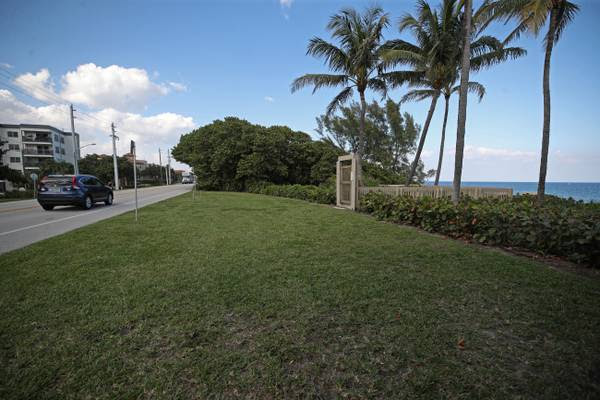
The empty beach lot at 2500 N. Ocean Blvd. in Boca Raton. A federal judge has ruled the owner has the right to construct a home on the property, and that three city council members were biased when they decided to deny the landowner’s building application. (John McCall/South Florida Sun Sentinel)

It is unknown what the city intends to do next.

Private attorneys Daniel Abbott and Anne Reilly Flanigan, who represent the city from the law firm of Weiss Serota Helfman Cole Bierman in Fort Lauderdale, declined comment through a spokesman.

Anne Marie Connolly, the city’s communications and marketing manager, said Friday the city “is awaiting the final order from the judge. Once the city receives a final issuance, there will be a determination on how to proceed at that time.”

Since the litigation is still pending, she added, “we cannot comment any further.”

Natural Lands bought the property in 2011, with Naim, the owner and a commercial real estate developer, hoping to build a four-story, 8,600-square-foot home as a personal retreat, Isrow said.

In 2015, the city council granted a variance to build the home and the state of Florida awarded a permit certifying that the project wouldn’t harm the shoreline environment.

But over the ensuing four years, public pressure against beach development grew. And the council, citing staff member conclusions, overrode the state’s permit.

In 2019, Natural Lands sued in state court, which decided that Mayotte and O’Rourke, two of the council members, should have recused themselves because of adverse comments they made about the project prior to their decision. An appellate panel ordered a new vote without the two women’s participation.

Natural Lands also sued in U.S. District Court, alleging the city had engaged in a “taking” that undercut the value of the property, which was purchased in 2011 for $950,000.

“Our position is if the state granted our permit within eight months … how can the city take a contrary position about environmental impact?” Isrow said Friday.

Around the start of the federal trial in March, Sweetapple, who had previously sued the city over state Sunshine Law violations arising from its dispute with Azure, shared documents he’d collected with Natural Lands’ lawyers that showed discussions involving the council members and Mayor Singer had taken place privately.

“We were able to see what was behind the curtain,” Sweetapple said Friday in an interview.

During closing arguments, Abbott, who represents the city, objected to the documents’ use, saying he had come to court to defend against Natural Lands’ reverse condemnation case, not allegations that the city had violated the landowner’s due process rights.

Nonetheless, Smith, a former state prosecutor and county and circuit court judge in Miami-Dade County, indicated he was taken aback by evidence that clearly showed bias on the part of the elected Boca Raton officials.

The mayor was “clearly biased by any stretch of the imagination,” the judge said, according to a transcript of a March 24 hearing at which he delivered his findings.

“Singer looked at us like a deer in headlamps who was a person, a trained lawyer, that he never heard of the word ‘fair’ before,” Smith said.

He also referred to a video in which the mayor “stood on the plaintiff’s property, said there’s no way that this property will ever be built. We’re going to keep it that way.”

Mayotte, the judge said, “displayed complete bias from the start.”

O’Rourke, Smith said, “walked in here and took the stand and literally feigned ignorance, or was in denial of where she had multiple communications with individuals that violated not only the city’s codes but the Sunshine Law as well ….”

In the end, Smith did not rule that the city’s action amounted to the taking of land for a public use. And he affirmed the local government’s right to regulate properties around the city.

“The court wishes to underscore that the city has the right to regulate the parcel at 2500 North Ocean … just as it does all other parcels within the city,” the judge said. “However, it must do so without depriving any citizens without due process of law.”

Article Link: Judge rips Boca politicians, opens way for beachfront home project
Author: David Lyons

Related Group Digs In on Brickell Project That Unearthed Ancient Artifacts

The multi-building development highlights what other builders often confront when working the now-hot Miami River waterfront

In the middle of Miami’s glitzy Brickell neighborhood, archeologists have uncovered thousands of artifacts and human remains at a riverside site. Those findings, some experts say, are the clearest indication yet of life in what’s now Miami dating back 7,000 years — older than the first cities in Mesopotamia or the construction of the Giza Pyramids in ancient Egypt.

“It’s a phenomenal site. It would completely change everything we know about archaeology in Miami and South Florida,” said Sara Ayers-Rigsby, a professor at Florida Atlantic University and the director of the Florida Public Archaeology Network.

But not everyone is so thrilled. Miami advertises itself as a developer’s paradise, championing the next big project. The property’s owner, Related Group, Miami’s largest condo developer, is planning to build a three-tower development on the site at 77 SE Fifth Street and 444 Brickell Avenue, considered one of the city’s most sought-after locations.

As preservationists and some residents press opposition, the crown jewels of Related’s development, a Baccarat-branded condo tower and a luxury hotel, hang in the balance. City officials, after months of silence, have taken the first step in possibly designating parts of the parcel as a protected archaeological landmark. The proceedings have already delayed construction and could potentially torpedo the development.

Related bought the 4-acre site, which faces the Miami River, for $104 million in 2013 just as Brickell was being recast from a sleepy residential neighborhood into a financial center, home to glistening skyscrapers. The developer left the two existing 1970s-era buildings untouched, until Miami’s real estate market took off during the pandemic.

An influx of wealthy Northerners seeking low taxes, year-round sunshine and refuge from stringent COVID restrictions, sent prices of Miami condos skyrocketing. In early 2021, Related unveiled plans to build three buildings on the prime site: a 44-story rental, an 82-story hotel and condo, and a 75-story condo. The third tower would be branded by Baccarat, the 259-year-old French luxury crystal maker. Jorge Pérez, Related’s chairman and CEO, hyped the Baccarat building as his firm’s “most luxurious product” in its 45-year history.

Centuries ago, the section of the Miami River, which opens to Biscayne Bay, was home to the Tequesta indigenous tribe and village, considered South Florida’s largest settlement prior to the arrival of Europeans. In 1513, Spanish explorer Juan Ponce de Leon encountered the Tequesta by the mouth of the Miami River. Previous excavations have uncovered artifacts dating back 2,000 years.

“Anybody who buys anything along the river, especially at the mouth of the river, knows what they’re getting into,” said Traci Ardren, an anthropologist and archaeologist at the University of Miami who specializes in New World prehistoric cultures. “It’s one of those buyer beware situations.”

Since the 1980s, city regulations have required developers to check parcels along parts of the river and bay for archeological remains and artifacts before breaking ground. Related hired veteran archeologist Richard Carr to conduct a search. In April 2021, Carr sent the city a “notice of discovery.” As required by law, a full excavation ensued, which Related says has cost over $20 million.

The archeologists uncovered at least two gravesites with skeletal fragments, possibly part of a ceremonial burial, as well as postholes, which could be the marks of a prehistoric structure. Overall, the diggers found 16,610 pottery shards and 340 bones. Perhaps most notable were the dozens of projectile points that appear to date back to the Archaic period, which in the Americas stretched approximately between 8,000 to 500 BCE.

While Carr believes the Tequestas found the artifacts centuries after their creation in northern Florida, other experts disagree. Those discoveries have the potential to push back the timeline of when Native Americans inhabited what today is considered Miami by thousands of years, according to William Pestle, the chairman of the University of Miami’s anthropology department.

“The mouth of the Miami River, which is obviously today prime real estate, was also prime real estate a 1,000 years ago, 2,000 years ago,” Pestle said. “And now maybe more: 5,000, 6,000, 7,000 years ago.”

Carr himself believes the parcel is worthy of preservation. The site “is eligible for listing in the National Register of Historic Places … because the site provides important data documenting prehistoric culture, subsistence, and settlement patterns in South Florida, and specifically the Tequesta culture on the Miami River,” Carr wrote in the public reports, adding his recommendation that “intact portions of the site be avoided if feasible”.

Yet, as 2023 dawned, it looked like Related was getting ready to start construction — with the apparent blessing of the city. The developer took out a $164 million construction loan to begin work on the rental tower, property records from December show. The company was also close to securing a second mortgage for the Baccarat development, a Related spokesperson told Commercial Observer in January, even though the excavation had yet to end. That excavation remains active today on part of the site, while construction has started on another part.

The loans were evidence that Related had secured permits from the city for one tower and was close to securing permits for another. City officials had yet to publicly comment on how it would handle the archaeological artifacts, a sign that it was prioritizing the development. (City officials did not respond to Commercial Observer’s multiple requests for comment.)

Frustrated by the city’s silence, independent local archeologists began showing up to the public meetings of Miami’s Historic & Environmental Preservation Board, the regulatory committee charged with overseeing the dig. They demanded that the board preserve the site. Just a day after the Miami Herald published a scathing article, the board unanimously voted in February to begin studying whether the site, where the Baccarat development was set to rise, merited legal protection — reversing its previous pro-development stance. The move seems to have stalled Related’s construction. The much-expected second construction loan has yet to appear in property records.

Archaeology has already blocked other Miami developments.

In 1998, developer Michael Baumann bought a parcel across the street from Related’s contested site to build a luxury condo. Before construction began, archeologists discovered a circle measuring 38 feet and containing 24 holes — indicative of a religious structure — as well as shell, stone, bone and pottery artifacts from the Glades culture and the Tequesta civilization. Public outcry followed. Florida’s state government bought back the parcel for $26 million and preserved it. In 2009, the site, which is now called the Miami Circle, was designated a National Historic Landmark and today houses a dog park.

Most times, though, ambitious Miami projects move forward. Across the river in Downtown Miami, MDM Development Group planned a multi-tower, $1 billion luxury development meant to revitalize Miami’s urban core. On one site, archeologists unearthed a portion of the Tequesta tribal village, including a cemetery, dating back 2,000 years, as well as the foundation of the Royal Palm Hotel, which oil magnate Henry Flagler built in the 19th century. The excavation took about a decade, but MDM eventually completed a 34-story, mixed-use building called Met Square in 2018.

Related is ready to fight. It has told the condo buyers of the Baccarat development, which is nearly sold out, that the project is moving forward. We “have property rights. We own this parcel and have worked with the city and the state governments to establish those development rights,” Jorge Pérez wrote in a Miami Herald op-ed last month. Although he vowed to preserve the artifacts for research and display them in a “major” exhibition, the developer accused preservationists of exaggerating the importance of the findings. The artifacts, while “important,” are “not as old as the pyramids,” Pérez wrote. (A spokesperson for Related declined a request for an interview.)

The law is on Related’s side, according to Keith Poliakoff, a founding partner of Government Law Group law firm, which has represented property owners and local governments in disputes involving archaeological discoveries. The Preservation Board is unlikely to prevent Related from building. If the project is blocked, a governmental entity would need to buy the land from the developer. The price tag would likely be too high. Perhaps even more costly would be the long-term negative impact on Miam’s pro-business and pro-development bent, Poliakoff said.

At the Preservation Board’s latest public meeting April 4, board members tried to broker a compromise. At Related’s request, they withdrew plans to move forward with designating a portion of the site a historical landmark. In return, the developer must work with archeologists and Native American tribes to come up with a “preservation action plan” six months after the ongoing excavation is completed. The board would still need to approve the proposal, which is likely to include exhibition space at the development and the addition of a plaque explaining the site’s historical significance. As stipulated by Florida law, human remains will be removed and reburied under the guidance of Florida tribes, including the Seminoles, who declined Commercial Observer’s request for comment.

The arrangement allows Related to move forward with the Baccarat development — for now. A lawyer representing the developer said delays caused by the designation process would have cost Related “hundreds of millions of dollars in damages” with financial partners, investors, lenders and condo buyers. The compromise also avoids, as one board member cautioned, “protracted litigation.” After the April 4 meeting, Related issued a statement saying it was “pleased with the board’s decision.”

The ordeal appears to have spooked other developers. Fortune International Group’s Edgardo Defortuna, 13th Floor Investments’ Arnaud Karsenti, and Integra Investments’ Nelson Stabile, who all have luxury condo developments in the works in and around Brickell’s waterfront, spoke in opposition of historical designation. Defortuna and Stabile sat through the entire six-hour meeting.

As pressure mounts, further delays, and even cancellation, are not out of the question. The meeting drew such a large crowd that a tent was installed outside of Miami City Hall to accommodate those without seats. During the meeting, both opponents and proponents spoke for over an hour and a half.

Another battle looms for the other half of Related’s site — which archeologists have yet to excavate. It houses a 13-story office building. Related wants to eventually demolish it to make space for the luxury hotel. Because it’s located between the excavated site and the Miami Circle, the land is likely to hold a trove of historically significant objects. Ideally, archaeologists want the site to be left untouched, viewing it as the last opportunity to preserve a probable archeological treasure trove since much of Brickell and Downtown Miami has already been developed. They’d even prefer no excavation take place as excavation methods improve over time, reducing the risk of ruining uncovered artifacts.

The Preservation Board unanimously voted to initiate the landmark designation process for that portion of the parcel. By starting the procedure early, board members want to reach an agreement with Related before it puts in place financial commitments in hopes of preventing another frantic fight. They’re expected to make a final decision in July after city staffers present their recommendations. “We will work with the city hand in hand on the designation of the site. Our efforts will continue to be transparent and inclusive,” Related said in a statement.

But some fear the board is setting a bad example. “When we think of Miami, we don’t think of people and preserving their history. We think about the new and about moving forward,” said Helena, a Miami resident who spoke at the April 4 hearing and did not give her last name. If this site doesn’t meet the standard for preservation, “then what does? Do we need to find Noah’s Ark?”

Julia Echikson can be reached at jechikson@commercialobserver.com.

Article Link: Related Group Digs In on Brickell Project That Unearthed Ancient Artifacts
Author: JULIA ECHIKSON

Florida’s affordable housing law could “change the look of coastal cities”

Developers are in contract to buy commercial sites due to new legislation

Brian Sidman, Keith Poliakoff, J.C. De Ona and Jake Morrow (Getty)

Developers are analyzing how to take advantage of Florida’s new legislation, which will set aside over $700 million in funding, create tax breaks, and provide zoning-related incentives for affordable and workforce housing developments.

The law could contribute to a new boom in housing development, from entirely affordable buildings to mixed-income towers on commercial sites that developers are now looking to purchase, experts say.

The Live Local Act, which Gov. Ron DeSantis signed last week, aims to help fill financing gaps, making more developments economically feasible. What is still crucial, attorneys and developers said, is combining that with incentives on the local level.

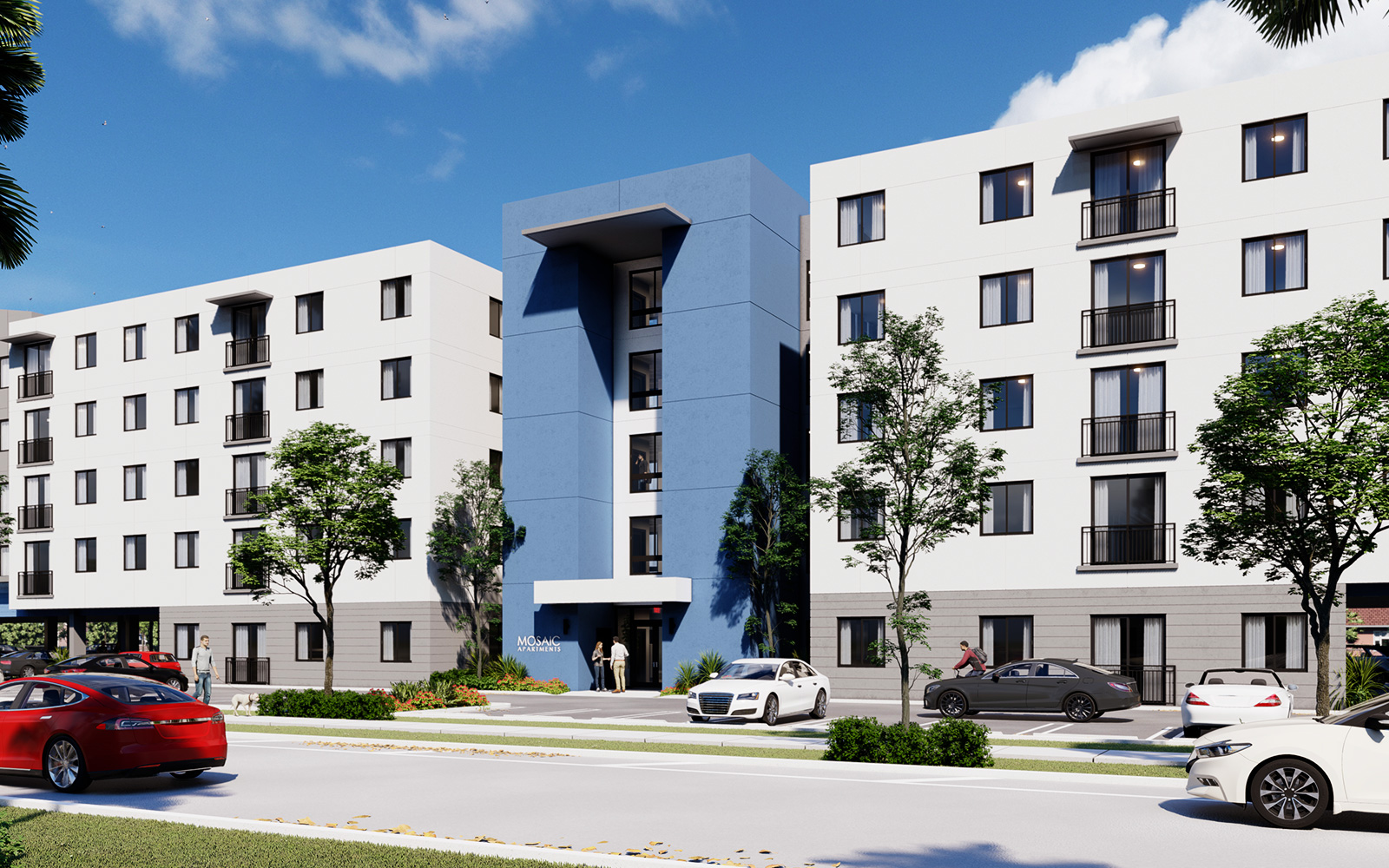
A rendering of Mosaic in Opa-locka (Levy PR)

“These incentive programs, in conjunction with working cities and municipalities — that’s the way you’re going to fill a void and a gap and a huge need,” said Brian Sidman, of Miami Beach-based Redwood Dev Co. “The problem isn’t going to be solved by developers buying private land. That ship has sailed due to the cost of private land.”

Still, Sidman called the legislation “a great start,” and applauded DeSantis and the Florida Legislature.

“If we don’t fix our housing crisis, we’ll have other material programs that will trickle down,” he said.

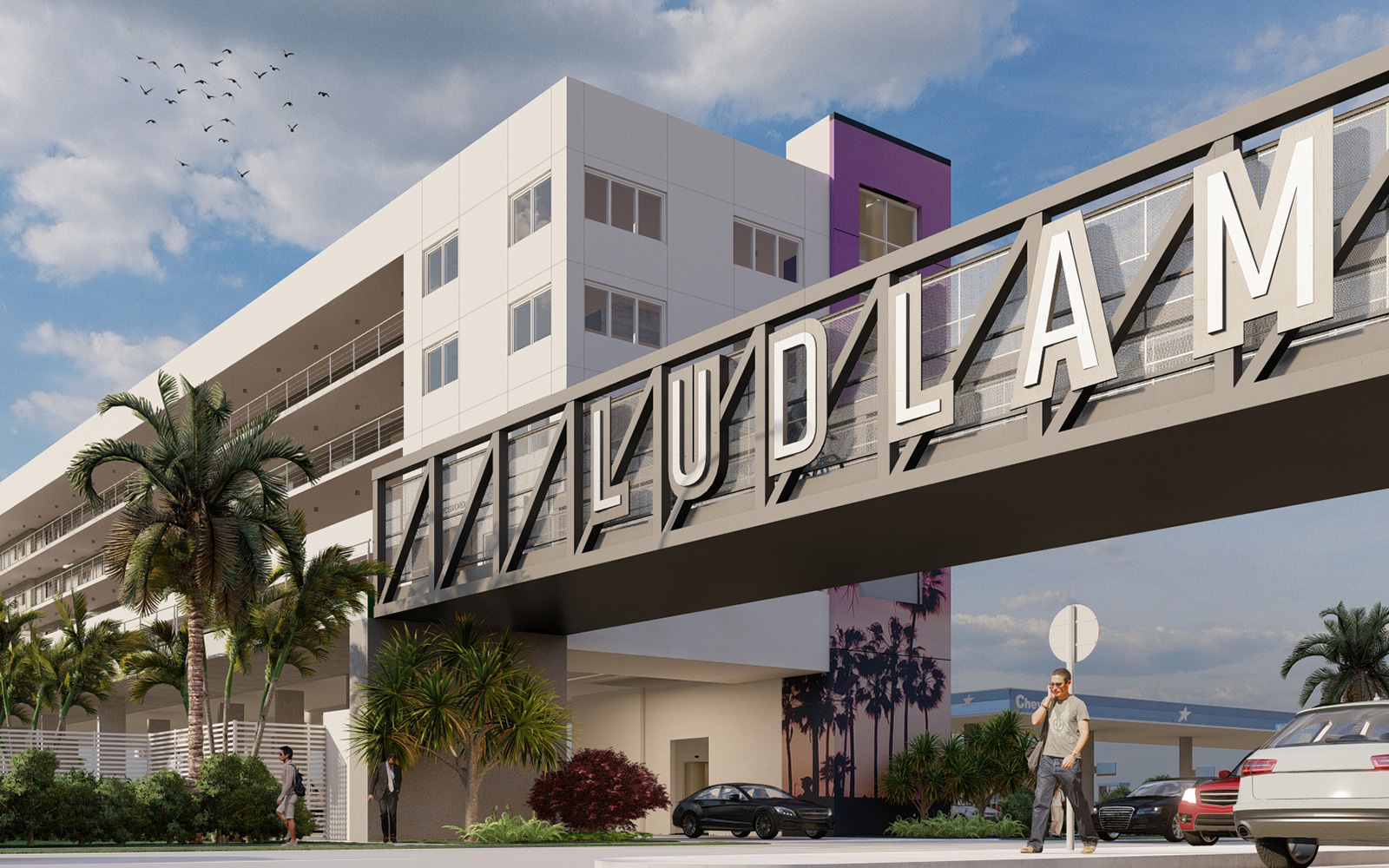
A rendering of Ludlam Trail Towers (Levy PR)

Redwood is analyzing the SAIL (State Apartment Incentive Loan) program to see which of its projects could secure low-interest loans for workforce housing. Redwood, which has more than 1,500 units in the pipeline in South Florida, aims to build more than 5,000 affordable and/or workforce units over the next five to seven years. It recently broke ground on Mosaic, a 98-unit development in Opa-locka.

The new legislation sets aside $259 million in SAIL funds. It also promises $252 million in SHIP (State Housing Initiatives Program) funding to incentivize local governments to partner with developers preserving or building new housing.

The law goes into effect July 1. Developers are expected to apply for incentives this summer, and receive funds next year.

Jake Morrow, who leads Miami-based Integra Investments’ affordable and workforce housing division, Interurban, pointed to the law’s ad valorem tax exemptions. The property tax breaks, which existed already for senior affordable housing, will provide a stimulus for affordable and workforce housing that meet specific criteria.

A rendering of Ludlam Trail Towers (Levy PR)

“Due to this legislation, we’re very actively taking a second look at several new affordable housing developments we previously deemed infeasible, especially in South Florida,” Morrow said. Interurban recently completed 670 affordable and workforce housing units in the tri-county region.

If developers don’t have to pay property taxes (beginning in 2024), they can count on a project generating more net operating income, which means they can borrow more debt. Ultimately, that means they could develop more units, experts said.

J.C. De Ona, president of Centennial Bank’s Southeast Florida division, agreed that affordable housing developers will still need local funding or other incentives to make their deals pencil out. He referred to Ludlam Trail Towers, a senior affordable housing development under construction in Miami. Centennial provided a $7.5 million construction loan to the developer, an affiliate of MV Real Estate Holdings. Without funding from Miami-Dade County, the project wouldn’t have moved forward.

“We’re looking at another project in Sweetwater. Unless it has both state and county support, the deal doesn’t happen,” De Ona said.

The huge increase in construction costs — including the price of land, debt, labor and materials — and insurance have contributed to the lack of affordable housing.

The Live Local Act aims to remedy some of that. It will put $100 million in non-recurring funds into a competitive loan program that developers could tap to cover inflation-related cost increases for Florida Housing and Finance Corporation-approved multifamily developments that haven’t broken ground yet. Separately, it will provide up to a $5,000 sales tax refund for building materials used to construct affordable housing units that were funded by FHFC.

The law will preempt local governments’ zoning, density and height requirements for affordable housing in areas zoned for commercial or mixed-use development. That means counties will be banned from restricting density of a proposed development below the highest allowed density on any property in an unincorporated area where residential development is allowed. Local governments will also not be able to restrict height below what’s allowed within one mile of the proposed building.

Local governments also must allow multifamily or mixed-use residential developments that set aside 40 percent or more of their units for at least 30 years to affordable housing.

The zoning incentives are significant, but attorneys and developers noted that as buildings get taller, they become more expensive to construct. That typically happens at about the seventh or eighth floor of construction, they said. For some, it will pencil out to add some units or a couple of extra floors of development.

“If you’re going x amount of stories already, the construction costs don’t go up that substantially,” De Ona said. “If you’re still in at the same dollar per unit and same profitability per unit, it makes sense.”

Developers are already looking at sites to build mixed-income projects, with affordable or workforce housing on the lower floors, and market-rate and luxury above it, said attorney Keith Poliakoff of Fort Lauderdale-based Government Law Group.

Poliakoff believes that the height, density and even parking incentives will “dramatically” change communities and result in a housing boom. Reductions in parking requirements for projects proposed within a half-mile of a transit stop are also on the table.

“meet with potential and existing clients almost daily who are under contract on commercial properties, who would not be under contract if not for this law,” he said, citing pending deals in Sunny Isles Beach, Fort Lauderdale and Hollywood that have popped up in the last week.

“It’s going to totally change the look of [coastal] cities,” he said.

Article Link: Florida’s affordable housing law could “change the look of coastal cities”
Author: Katherine Kallergis

Live Local Act to provide millions in affordable housing across Florida

Governor Ron DeSantis signed the Live Local Act yesterday, promising millions in affordable housing funds and preempting local restrictions.

Housing in Florida is a well-known and difficult issue for residents to navigate. As the state’s population continues to grow, fuelled by deep-pocket individuals from California, New York, Illinois and other high-tax states, housing prices and rental rates alike have soared over the last few years. Consequently, affordable housing has become a rallying cry for local officials, community leaders, and everyday Floridians. Now, the Live Local Act promises relief – but developers will need to make full use of what the bill offers for it to work.

“When I moved here to Naples almost 43 years ago, the community was talking about the lack of housing for our workers,” said Senate President Kathleen Passidomo, who the Governor credits with shepherding the bill through the legislature. “It was a problem then and remains a persistent problem in many areas of our state – that changes today!”

The bill, formally known as SB 102, provides $711 million in funding for affordable housing projects, low-interest loans, preempts municipalities ability to regulate height and density restrictions, and prevents the implementation of rent controls. According to attorney Keith Poliakoff of the Fort Lauderdale-based Government Law Group, the bill “takes a lot of the handcuffs off” of affordable housing development, reported TheRealDeal.

The bill provides $259 million for the Florida State Apartment Incentive Loan (SAIL) program, which provides low interest loans for workforce housing projects. SHIP – the State Housing Initiative Program, also receives $252 million to incentivize local government partnerships with developers to preserve or build new housing. Both programs are administered by the Florida Housing and Finance Corporation (FHFC).

The FHFC will also receive a one-time $100 million for the creation of a competitive loan program for developers looking to cover inflation-related costs in FHFC approved multifamily projects that have yet to break ground. The funding will likely provide relief as financing certain projects becomes more of an issue as rates continue to rise and lenders pull back. As Roy Faith, senior vice president of investment and development group The Faith Group, explained in an earlier interview with Invest: Miami. “You have to have great relationships with banks and financial institutions as well as with your partners. That is challenging in today’s market. There are a lot of projects that have been delayed right now because of what we are seeing in the market. In the next six months to a year, we will see how the market changes and that will impact many of the deals moving forward,” Faith said.

The bill also codifies the popular Hometown Heroes Housing program, a homeownership assistance program begun last year that allows law enforcement officers, firefighters, educators, healthcare professionals, childcare employees and active military personnel or veterans to receive first time income-qualified down payment and closing cost assistance.

Zoning concerns are also addressed in the bill. What was once a mundane part of the development cycle has become increasingly contentious across the state. Municipalities have been increasingly caught in the middle, attempting to relieve housing costs by upzoning for developers while simultaneously limiting changes to specific, often transit-oriented corridors to placate residents. In some cases, upset residents who oppose higher density and new development have worked and succeeded in making the process as arduous as possible in the hopes of project cancellations.

Under the new law, the decision has been removed from local officials’ hands. For the next 30 years, local governments are now required to allow multifamily or mixed-use residential projects that set aside at least 40% of the residential component for affordable housing. In projects where 65% of the square footage is residential, a county cannot restrict the height of the project to anything less than what’s currently allowed within one mile of the plan. The law also requires local officials to look at reducing parking requirements for projects within a half mile of major transit stops.

While there may be some questions, and no doubt some upset citizens, to emerge over the coming weeks and months as developers, attorneys, and local officials relay the information to their respective stakeholders and adjust to the new reality, the state seems poised to embark on what could be another building boom, even as national economic uncertainty begins to slow demand in some Florida markets.

“Together, we are shutting down affordable housing stereotypes and creating attainable housing options needed by the majority of our workforce, the backbone of Florida’s economy… As our state continues to grow, our Live Local Act will make sure Floridians can live close to good jobs, schools, hospitals, and other critical centers of our communities that fit comfortably in their household budgets, no matter the stage of life or income,” Passidomo said.

The full text of the bill is available here

For more information, visit: 

https://www.flgov.com/

Article Link: Live Local Act to provide millions in affordable housing across Florida
Author: Joshua Andino

Boca Raton: Judge rebukes officials, orders new review of proposed beach house

A federal judge has ordered Boca Raton to reconsider its 2019 denial of a permit to build a home on the beach and barred Mayor Scott Singer and City Council members Andrea O’Rourke and Monica Mayotte from taking part.

U.S. District Judge Rodney Smith excoriated the three officials for bias they showed under oath and said some of their actions were apparent violations of Florida’s Sunshine Law. He saved his strongest words for O’Rourke.

“The record is replete with her bias all over. … Her credibility is totally shot,” Smith said.

Natural Lands LLC sued the city in federal court, claiming that the vote by Boca Raton’s elected officials stripped its property at 2500 N. Ocean Blvd. of all economically beneficial or productive use. It bought the .34-acre parcel in 2011 for $950,000; its plans for a four-story, single-family home provoked a public outcry.
After a five-day non-jury trial, Smith on March 24 declined to rule the case an unconstitutional taking of land by the city government, saying case law required that the property have no remaining economic value.

The property at 2500 N. Ocean Blvd. will come back to the City Council for consideration. Photo provided

“The emphasis on the word ‘no’ in the text of the opinion was, in fact, reiterated in a footnote,” Smith said, sending the case back to the City Council.

But Smith had little good to say about the three elected officials.

“I can tell you, from the beginning I was somewhat taken aback,” Smith said. “I don’t believe it for one minute that they would even consider being fair and impartial to Natural Lands under any stretch of the imagination at all.”

Singer, he said, was obviously biased and his testimony “made it clear as to his stance — he cannot be a fact-finder and impartial decision-maker in this particular matter.”

Smith found that to be particularly irksome because Singer, who was out of town and testified via video recording, is a lawyer. “He could not even address … what does the term ‘being fair’ mean. He looked at us like a deer in headlamps who was a person, a trained lawyer, that he has never heard of the word ‘fair’ before,” Smith said.

O’Rourke, the judge said, presented “unbelievable” testimony on the witness stand. At one point she “pretended” that she did not know she had been prohibited from voting in the case by the Palm Beach County Circuit Court and the 4th District Court of Appeal, he said.

Mayotte, too, “demonstrated complete bias from the start,” said the judge. “Clearly she had no business casting a decision knowing how she felt.”

Of all three council members, Smith said, “their beliefs were strong to the point where it was stronger than Gorilla Glue as to their bias that no property or nothing would ever be built.”
Smith deviated from the earlier circuit court and 4th DCA rulings in the Coastal Construction Control Line vote, which declared only O’Rourke and Mayotte biased, by tagging Singer as well.
Court documents showed Singer on Aug. 23, 2018, for example, emailed a resident that “Based on the potential impact on our dunes and sea life (including turtles), I will NOT support granting a variance that would be needed to allow the coastal construction for this lot and the proposed home there. My policy has been and still is to protect our beaches and green space.”

Midway through the trial, Smith allowed evidence to be presented on the actions of then-Deputy Mayor Jeremy Rodgers, who is no longer on the council, but did not specifically discuss it while making his ruling.

The Natural Lands lawyers discovered that the city had stipulated in similar litigation involving nearby 2600 N. Ocean Blvd. that Rodgers in August 2017 emailed a resident to say, “I’m of course going to continue going NO on 2500 and likely NO on 2600.”

That case also includes Facebook Messenger exchanges between Rodgers and O’Rourke regarding the beach parcels and Sept. 17, 2018, text messages between O’Rourke and Mayotte, court documents show. Florida’s Sunshine Law prohibits two or more elected officials from discussing issues outside of meetings.

But the end result of the Natural Lands case is that the partnership will again have to submit its application to the city to build seaward of the Coastal Construction Control Line. During the trial, Deputy City Manager George Brown and Development Services Director Brandon Schaad testified that the owner could submit a plan for a smaller house.

And despite their emails in evidence to the contrary, Singer, O’Rourke and Mayotte all testified that they might have approved a smaller structure.

Smith relied on that for his ruling.

“The court does not find that there has been a total taking,” he said, while noting that Natural Lands’ right to build a single-family home on the parcel “is a vested right,” meaning it existed before the partnership bought the property and will stay with the land if Natural Lands sells it to someone else.

Smith’s decision that Singer, O’Rourke, Mayotte and anyone else who was “tainted by them” cannot take part in the reconsideration means three sets of fresh eyes for the application. Term-limited O’Rourke’s last day in office was March 31. Without Singer and Mayotte, the issue will be decided by Yvette Drucker, Fran Nachlas and Marc Wigder, who all took office long after the Natural Lands vote.

Smith also ordered the city to pay Natural Lands’ attorney’s fees and costs.

Gavriel Naim, a Natural Lands partner who sat through the trial, said he needed time to digest Smith’s ruling before commenting on it.

“I won on my right to develop my property,” he said.

Brown, who also sat through the trial as the city’s representative, said only that when Natural Lands resubmits a plan, “We’ll consider it.”

Drawings show LEFT: the side of the building that faces Ocean Boulevard with two driveways and RIGHT: the mostly glass side of the building facing the beach. Renderings provided

Natural Lands planned to build a 48-foot-tall, 8,666-square-foot single-family home at the site and obtained a Notice to Proceed from the state Department of Environmental Protection in October 2016.

The City Council caused a public outcry in December 2015 when it approved a zoning variance at 2500 N. Ocean to allow something to be built on the 88.5-foot-wide lot. City rules normally require lots at least 100 feet wide.

It denied the CCCL variance on July 23, 2019.

Singer did not immediately return a call seeking comment.

Before the trial, the city offered to pay Natural Lands the $950,000 it paid to buy the parcel to drop the case. The partnership declined.

During the trial, Celora Jackson of the state DEP testified that any construction project on the beach would have adverse effects on sea turtles but that her department made sure there were no “significant” adverse impacts before issuing a Notice to Proceed.

Article Link: Boca Raton: Judge rebukes officials, orders new review of proposed beach house
Author: Mary Kate Leming

These bills in the Florida Legislature could have a big effect on Orlando development. Here’s how.

Companion bills making their way through the Florida House and Florida Senate have Paul Owens and others who share concerns about citizens’ ability to push back against development on alert.

The bills are Florida House Bill 359 and Senate Bill 540, which would mandate that those who sue local governments over comprehensive plans or comprehensive plan amendments be on the hook for attorney fees and court costs if the municipality or county being challenged prevails in the matter.

Comprehensive plan amendments are often necessary in the entitlement or approval process for new development, and lawsuits over them are one of the tools available for individuals or groups wishing to prevent or delay such development.

For Owens, a longtime Orlando resident and president of Tallahassee-based 1000 Friends of Florida, a smart-growth advocacy group, these bills are a big deal — and a big problem.

“If this provision becomes law, it will be too risky for citizens or public interest groups like mine, with modest budgets, to take the financial risk of challenging a comprehensive plan amendment,” Owens told Orlando Business Journal. “If the citizens or public interest group loses, then they are on the hook for those legal costs. I’m talking potentially six figures [in legal costs], and there are very few people I can think of who would be willing to take that financial risk.”

Robert Rosen, an attorney and partner in the Orlando office of Burr & Forman, similarly told OBJ that this type of legislation likely will have a chilling effect on challenges — but also could help avert challenges with no merit.

That matters, as well, because such challenges can be used as a tactic to delay projects until the clock runs out on their feasibility, according to attorney Keith Poliakoff of Fort Lauderdale-based Government Law Group.

In an interview with The Real Deal, a New York-based real estate news site, Poliakoff — whose practice has involved representing both municipalities and citizen groups that challenge them in such case — said such delays can take projects past the point of viable.

“Because of the unfortunate slowness of our courts, developers are finding that it can potentially take years before the challenge ever sees a judge or light of day,” Poliakoff said. “That delay causes [developers] to miss the cycle and makes the property no longer desirable to develop.”

In a separate statement sent to on Poliakoff’s behalf to media outlets in Florida, Poliakoff further reinforced the potential chilling effect Rosen alluded to, arguing that since municipalities win these types of cases more than 90% of the time, the risk of incurring such costs would be all the more heightened for those challenging the development.

Related to this set of companion bills is a second set of companion bills — Florida House Bill 843 and Senate Bill 816 — which would require the prevailing party in these types of lawsuits to demonstrate that the litigation was “frivolous” in order to recover those costs.

Meanwhile, the legislation figures to be closely observed in metro Orlando’s commercial real estate community as it moves closer to an outcome.

“Anything that deals with the overarching idea of property rights is something we’re very much interested in,” said Daryl Carter, of Maury L. Carter & Associates, a longtime Orlando land broker. “My opinion is anything that protects property rights is good, and anything that erodes property rights is bad.”

Currently, HB 359 and SB 540 are making their way through the respective committee processes in both the Florida House and Senate. Filed later in the session, HB 843 and SB 816 have both been referred to committee.

The legislation comes at a time when expediting development, particularly housing, is top of mind for many cities and counties in Florida.

Owens said it would be a “false choice” to pit citizen engagement in the development process squarely at odds with the ability to accommodate growth.

“I think there’s plenty of room between where both can be accommodated.”

Similarly, he acknowledged that the type of litigation that might be discouraged by the laws, if enacted, is not the only — or even the main — method for groups to engage in the community planning process. Showing up to government meetings in which comprehensive plan amendments are discussed and speaking up during public comment, so that officials know where the community stands, is also an important tool.

“That isn’t taken away, thank goodness, under this bill,” Owens said. “But it’s still important to have that option [to sue] if the decision makers are not swayed by community opposition that is expressed at these meetings.”

Article Link: These bills in the Florida Legislature could have a big effect on Orlando development. Here’s how.
Author: Steven Ryzewski