‘All part of the game’: Commercial landlords seek ways out of long-term leases as more lucrative tenants arrive

Property owners that don’t want to renew leases as rents increase will find unique ways to get out of contracts.

Landlords are finding ways to oust long-term tenants and replace them with new businesses willing to pay premium asking rents, two attorneys told the Business Journal.

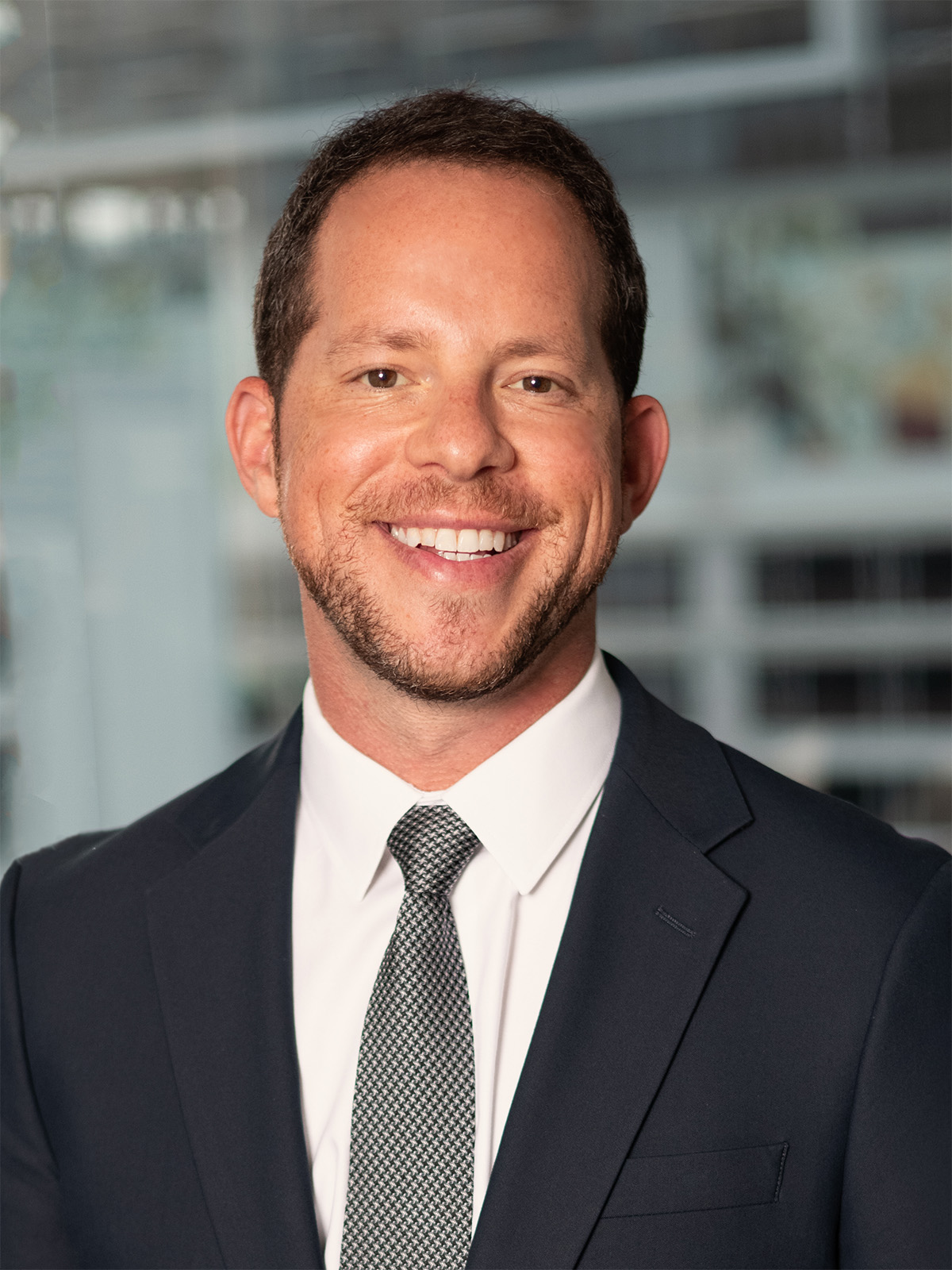
Jordan Isrow, a partner in the Fort Lauderdale-based Government Law Group, said he has helped at least three landlords get out of renewing their leases with their long-term tenants so they could obtain new, more lucrative lease deals with companies relocating from New York and other parts of the country.

“With businesses moving to southeast Florida, commercial real estate has increased in value. That, in turn, makes it harder for tenants to stay in their lease or renew,” Isrow said. “[Landlords] are trying to capitalize on an opportunity that is presenting itself.”

The trend has come back mostly in South Florida’s retail sector, where average asking rents have risen 13.5% in Broward, 15% in Miami-Dade, and 16% in Palm Beach County from last year, according to recent figures from Colliers.

The rise in retail rents and fall in vacancies are largely driven by out-of-state restaurant operators who want their businesses in a region that has attracted high-income households, brokers and developers have told the Business Journal. At the same time, out-of-state companies are opening branch offices and, in some cases, even moving their headquarters to South Florida.

New arrivals include chains and franchises who have the infrastructure to pay higher rents and make capital improvements to retail properties, said Dominic “Nico” Romano, a real estate attorney affiliated with Coral Gables-based Spiritus Law Firm.

“Now you have real estate that is much more valuable and [landlords] taking advantage of the increases in prices,” said Romano, who also owns retail property in North Lauderdale.

Dave Preston, executive managing director of retail services at Colliers’ Miami office, said landlords are typically eager to oust tenants locked in at lower rates when market rents are rising.

“It’s just the natural dynamic of landlord-tenant relations,” he said.

Isrow said his clients have been able to get out of lease renewals by exploiting contract clauses, including their ability to make renovations or upgrades.

For example, when one landlord announced he was going to reconstruct the parking area, the tenant opted not to renew the lease. The landlord opted not to pursue that renovation project after signing a lease with the out-of-state tenant, he said.

Another method is to be a stickler with contract terms when a tenant gives notice that he or she wants to renew their lease. In one case, a landlord declared his tenant in default after the renter failed to include a return address.

Finally, landlords often use their right to inspect their properties to eject tenants. So if a tenant is doing an activity not explicitly allowed in the lease, the landlord can hold that business in default.

For instance, a flex industrial building landlord was able to oust a grocery store using that method because it had a butcher shop on the premises, something not explicitly allowed by the lease, Isrow said. A financial firm replaced the grocery tenant.

“This is all part of the game right now,” Isrow said.

Mom-and-pop businesses usually don’t have the time or money to go through litigation to contest the situation, so they’ll usually take a settlement, Isrow said. Landlords are also willing to pay current tenants to move so they can bring in newer clients, he added.

Romano said tenants can negotiate a lucrative payment from a landlord who wants them out.

“Maybe [the tenant] has a huge asset like a liquor license,” he said.

Romano said mom-and-pop businesses in high-demand locations will be forced to close or move elsewhere.

Romano also said he sees no reason why retail rents will drop anytime soon.

“We have been fortunate in South Florida to have been in an inviting climate, both from a meteorological standpoint and a business standpoint,” Romano said. “As long as those things keep going, rents are going to keep increasing.”

Link: ‘All part of the game’: Commercial landlords seek ways out of long-term leases as more lucrative tenants arrive
Auther: Erik Bojnansky

Landlords Are Slashing Ties With Tenants to Capitalize on a Hot CRE Market. Here’s How They’re Doing It

“I think there’s going to be sympathy for businesses but at the same time, the law is really designed in a way to capitalistic benefit,” said Jordan Isrow of Government Law Group in Fort Lauderdale.

As commercial rental rates rise in South Florida, some landlords who are locked into leases are hoping to capitalize on the market by getting out of their contracts as businesses relocate and look for space.

That’s according to attorney Jordan Isrow of Government Law Group in Fort Lauderdale, who said he’s seeing landlords find creative ways to get out of their contracts.

“It’s mostly financially driven, but there may be other reasons as well, which is they may be looking to reshape the overall look and feel of a commercial space,” said Isrow. “They may be wanting to be changing direction and having a tenant they think may not otherwise be a good fit and having another tenant come in that’s competitive to that tenant.”

Landlords might also look for ways to invalidate a tenant’s options to renew, in order to get higher rental rates.

It’s all about looking closely at contracts, Isrow says, as no two leases are created equal. He recommended doing “a deep dive” into the lease and also looking at the tenant’s history.

“For example, I had a client who was looking to get out of a five-year extension that the tenant was otherwise entitled to under the lease,” said Isrow. “We found one provision in there that said that at the time the tenant issues its notice for renewal, it must be in good standing. The tenant missed a payment by just a few days, but that was during the window in which they sent their option to renew. This becomes a game of cat and mouse. We didn’t alert them to this kind of failure and instead waited for the notice window to pass. We informed them they were not in good standing at the time and therefore we were able to remove the tenant.”

There are a lot of prohibitive use clauses in a commercial lease that can prevent a tenant from using the property in a way that the landlord deems a nuisance to other tenants or brings down the value of the property.

Isrow said another strategy is to use the right to entry by a landlord provision to look around the tenant’s space.

“It’s an innocuous way to go in and say ‘We’re just looking around at the common elements.’ If they’re able now, once they’re inside the property, they can start looking around. Is there anything this tenant has failed to maintain that they’re responsible for? Is there any use that may not be in accordance with the lease?”

Finding a ‘Win-Win’

Ultimately, some landlords are not able to get out of their lease and end up in court, but that’s not the goal. Isrow says some parties are willing to pay their tenants to leave and may even help them relocate.
“They do this because of a cost-benefit analysis. They know that if they break the lease, they’re going to get sued, and they’re going to have to pay time and money for litigation. And if they can shortcut that and save some of the money and put it toward the tenant in a way that helps them get out of the situation they’re in and find another one, then it’s a win-win.”

Isrow doesn’t think the courts want to hurt landlords or tenants, they just starting to recognize the reality of the market.

“Some landlords are going to be able to pull it off, and others may not. It’s a very fact-specific situation,” said Isrow.

For attorneys representing landlords, Isrow says to be very specific as to what the goals are from the landlord, particularly if it’s a financially motivated decision. And before any decisions are made, review the lease.

“In some instances, depending on the relationship between the landlord and the tenant, there may be a viable solution as easy as having a conversation,” said Isrow. “You’d be amazed that sometimes if a landlord goes to a tenant and says, ‘Here’s my issue,’ sometimes that does the trick. Not always, but I think some lawyers are too quick to jump to the litigation front instead of actually finding an amicable solution.”

If a tenant still sues, Isrow believes the courts are sympathetic to the tenants: “I think there’s going to be sympathy for businesses but at the same time, the law is really designed in a way to capitalistic benefit.”

Link: Landlords Are Slashing Ties With Tenants to Capitalize on a Hot CRE Market. Here’s How They’re Doing It
Auther: Melea VanOstrand

Law Lags Behind Tech As 3D Construction Forges Ahead

Law360 (June 28, 2022, 1:27 PM EDT) — When the married co-owners of Precision Building & Renovating LLC decided to build Florida’s first 3D-printed home just outside Tallahassee city limits in 2019, the pair found themselves embroiled in a painful process that they eventually walked away from altogether.

Leon County slow-walked James and Kyndra Light’s permit application, repeatedly coming back to the Lights with requests for additional paperwork. The nine-month slog was “dead in the water” by the time the pandemic hit, James Light told Law360.

While a handful of 3D-printed homes cropped up across the country in 2021, constructed by Alquist 3D, ICON and SQ4D, the project floated by the couple would have been the first permitted 3D-printed home in the nation, James Light said.

“I went back and forth with them month after month trying to satisfy anything and everything,” Light said. “Trying to convince them that this is a legitimate process and something … we need to figure out how to inspect and figure out how the [building] code applies.”

Precision sold the Leon County property soon after the pandemic took hold and the couple turned their attention toward Tallahassee instead, which was “way more receptive” to the project.

“It was an easy slam dunk for them to approve,” said Light, adding that the pressure in the housing market and a shortage of skilled labor increased incentives for the Florida city in the meantime.

But even with the support of a municipality eager to be on the cutting edge, Light said, the company had to translate the house to a building code that made no mention of 3D printing.

In the end, the company “overbuilt” the structure, leaning on existing code for cinder blocks that translated best to the type made by the kind of printer the company had leased. According to Light, Precision filled the concrete-printed structure with additional concrete support, effectively treating the 3Dprinted structure like a facade.

The walls were completed in nine days and the entire structure, cheaper than stick-built alternatives by 10% to 20%, is set to be completed by the end of July, Light added.

While the nascent 3D-printing technology finds its footing as a cheaper and faster approach amid a housing market weighed down by labor shortages, supply chain congestion and the rising price of materials, attorneys told Law360 that such run-ups against existing code drafted without the technology in mind were to be expected until municipalities take steps to keep pace with the technology.

Hurtado Zimmerman SC shareholder Bryan Kroes noted that the rapidly changing nature of 3D-printing technology had contributed to the lag between the law and 3D projects already underway. Any existing code relating to 3D construction would already have been rendered obsolete, Kroes added, because of the swift pace at which the technology has evolved.

In situations such as the Lights’ Tallahassee project, construction companies will often rework existing code into a structure workable for the novel construction techniques, according to Kroes.

“Anytime that we’re trying to build something that is outside of those traditional construction methods, you’re going to find building inspectors and individual municipalities trying to figure out a way that the municipal building code that exists at that time can then be used for that particular structure,” Kroes said.

“And sometimes that means approaching from a unique perspective or essentially trying to shoehorn certain elements of the building into the various code areas that may be applicable to it,” he added. Though the Lights’ project is one of a handful underway or completed nationwide, developers have turned their focus to larger residential projects in recent months, including construction firm Alquist 3D’s April announcement that it plans to begin work on 200 3D-printed houses in Williamsburg, Virginia, this summer.

But with widespread and larger-scale use on the horizon, tension between existing building standards and the breakneck pace at which the technology is evolving must be resolved to take advantage of the benefits touted by proponents of the technology, according to Keith Poliakoff, a founding partner at Government Law Group PLLC.

“Code throughout the United States constantly has to evolve based on changing technology,” Poliakoff said. “All of us in the industry who see what’s going on with labor shortages and supply chain issues and the cost of construction — which post-pandemic has escalated … 30% to 40% — realize that developers are already scrounging the marketplace to look for other viable options.”

This reconciliation process will require the industry to confront questions of how utilities and assembly of component parts differ from traditional home construction methods, according to attorneys and experts. “Where I think many states are still going to have concerns is that it isn’t necessarily a licensed plumber who’s going to pull a piece of plumbing pipe through a wall or run electrical wire through a conduit,” said Kim Hurtado, founding partner of Hurtado Zimmerman. “Regular laborers will do a lot of bulk assembly that would ordinarily be handled by licensed professional trades; mechanical, electrical, plumbing, fire protection.”

Louis Archambault, partner in Saul Ewing Arnstein & Lehr LLP’s real estate practice, echoed Hurtado, noting that the sheer dearth of real-world trial and error leaves developers and lawmakers with unanswered questions.

“You still have to run electric lines to all of these different homes, you have to run water and sewer service to each of these different homes,” Archambault said. “Is that a process that can be done similarly to what you would do now with a regular 300 single-family home project?”

Poliakoff added that a “massive” education push for building inspectors would also need to be undertaken to ensure that future projects conformed to applicable standards, whatever they may be.

“The building material is so novel that it’s doubtful that many building inspectors in this state or across the country have seen it in action,” Poliakoff said. “It’s impossible for someone who has never seen it before to be able to confirm that it meets the structural integrity and material type [and] viscosity.”

Mighty Buildings, a California-based construction technology company, announced plans in March 2021 to construct a 15-home community in Rancho Mirage, California, after constructing three individual houses elsewhere throughout the state.

Mark Aldrich, general counsel at Mighty Buildings, told Law360 that municipalities were naturally cautious when approaching new technology in construction.

“Local jurisdictions are conservative, they’re there to protect their citizens and so they’re much slower to adopt newer technologies because they are responsible for protecting the people who live in their city,” Aldrich said. “It’s totally understandable.”

Unlike Precision’s approach in Tallahassee to building the 3D structure on-site, Mighty Buildings produces 3D-printed modular panels at a factory and later assembles the prefabricated components on-site.

According to Aldrich, the company chose to focus its operations in California because of a state law that allowed companies to seek preapproval for factory-built housing and building components. Under the state’s process, companies can submit plans for standardized designs installed in controlled conditions to the California Department of Housing and Community Development for preapproval, shrinking the typical permitting timeline from nine months to as little as two weeks.

Florida also has a similar provision in its building construction standards law allowing inspectors to approve prefabricated components.

Light told Law360 that Precision had originally considered whether the company might be able to obtain a permit for the 3D-printed home under this provision. But because Precision eventually decided to construct the home on-site using a gantry 3D printer, the provision wasn’t applicable, he added.

Under the statute for manufactured housing components, a state inspector watches as an entire unit and all subsystems including electrical and plumbing are assembled. If the manufacturing process meets applicable Florida building code requirements, subsequent modules need only be inspected once.

Hurtado said the approach could give 3D construction companies the “substantive equivalent of regular code compliance.”

“[The inspector] watches you assemble an entire unit, whatever that unit consists of, whether it’s a wall panel, an entire apartment that’s going to be slipped into a framework, a steel framework on multi-units, a high rise,” Hurtado explained.

Jurisdictions will also need to work with companies pioneering 3D construction technology to ensure the safety of the printing materials used, touted by proponents as capable of withstanding extreme weather conditions better than traditional materials, attorneys added.

According to the companies, Precision used a concrete mixture for the Tallahassee home while Mighty Buildings uses a resin made of 60% post-consumer product.

Global safety certification company UL developed a methodology for evaluating 3D-printed building elements and structures, known as UL 3401. Mighty Buildings became the first company certified under the standard, Aldrich said.

UL 3401 later became the basis for a 3D-printed construction appendix to a 2021 International Residential Code developed by the International Code Council, an international organization that develops global building standards.

Michael Schwartz, a construction attorney at Cohen Seglias Pallas Greenhall & Furman PC, told Law360 that the International Residential Code appendix could feasibly function as a unified building code for 3D construction so long as municipalities adopt it in reference to previous building codes.

“While [the appendix], which incorporates UL 3401, is not a complete and comprehensive list of all applicable codes and standards which are pertinent to a 3D-printed construction process, local building codes can ensure that all applicable requirements are met by incorporating previously adopted building codes,” Schwartz said.

Jurisdictions, however, must formally opt to adopt the updates contained in the 2021 code, leading to a piecemeal approach with many municipalities still abiding by the 2018 version. Only three Texas cities — Roman Forest, League City and Austin — have adopted the 2021 code and 3D appendix, according to a representative for the code council.

But while municipalities may be applying a characteristically cautious approach to the new construction technology, Kroes said shifting public opinion is likely to incentivize change as such projects proliferate across the country and become a viable method in the public eye.

“If it’s just a one-off thing, it may be very hard for a municipality to see the reason to adopt it,” Kroes said. “But if it starts to become more widespread, and also a viable alternative … well then, that may be the catalyst to get certain municipalities to act.”

–Editing by Karin Roberts.

Article Link: Law Lags Behind Tech As 3D Construction Forges Ahead
Author: Grace Dixon

On the Rise: Jordan Isrow

Get to know some of the most accomplished and promising attorneys in Florida, aged 40 or younger.

Title, Firm: Partner at Government Law Group

Jordan Isrow of Government Law Group in Fort Lauderdale.

What drew you to a career in law? As a kid I was the unfortunate victim of an accident that required serious surgery and extensive rehabilitation. That was the first time I had ever dealt with an attorney, who was there for me and my family in our time of need and left a lasting impression on me regarding the immeasurable value of understanding the law and using it as a tool to help others.

Have you set a specific goal that you want to achieve in the next year? Winning my reelection campaign for Parkland City Commissioner – District 2.

What has been your proudest career moment and your biggest hurdle? My proudest career moment to date was being asked to build and manage the first ever legal department for an industry-leading international cosmetics company and reducing annual legal spend by over 50%. My biggest hurdle has been overcoming the misperception that I am “too young” to be an effective attorney and a strong leader.

Where do you fit on a 1-10 work-life balance scale with 10 being nirvana? 8. Achieving the perfect work-life balance is a never-ending challenge that only gets easier with time, experience and introspection. The key for me has been learning to set my priorities, including my family’s health and happiness, and then tailoring how I work around my life as opposed to the other way around.

What is the top quality that you’ve used to succeed in the profession? My insatiable thirst for learning.

Who is your favorite mentor and why? My father-in-law, the late great Michael Moskowitz, who sadly recently lost his battle to pancreatic cancer. He was the smartest, funniest and most selfless person I’ve ever known. He taught me invaluable life lessons about being an outstanding lawyer, a savvy businessman and an upstanding member of the community, while still being true to himself and without ever sacrificing his integrity.

What’s the best advice anyone has ever given you? The life we live is simply a byproduct of the decisions we make every single day — so choose wisely.

What professional lessons have you learned from the coronavirus pandemic? The ways in which we communicate may evolve over time, but the importance of strong communication will never change. The one constant about the law is that it is always changing. What you knew yesterday may no longer be relevant or helpful tomorrow, so it is vital to always keep learning.

What trends are you observing in the profession that you’re excited about? The increased focus on work-life balance that will hopefully serve to greatly reduce the mental health issues that have troubled the profession for decades.

What is the greatest challenge you see for the legal profession? Moving away from the billable hour toward alternative fee arrangements that reward attorneys for being more efficient in how they help clients achieve their goals through the use of creative thinking and new technologies.

If I weren’t a lawyer, I’d be … A three-star Michelin Chef.

Link: On the Rise: Jordan Isrow
Auther: Raychel Lean

‘From the Ashes of Calamity’: Lawyers React to Swift $997 Million Resolution of Surfside Condo Collapse Litigatio

“Next time you hear someone disparage our profession, it is worth remembering some of the exceptional work done here.”

The June 24 collapse of Champlain Towers in Surfside killed 98 people and left dozens injured. Credit: Felix Mizioznikov/Shutterstock.com.

Less than a year after the June 24, 2021, collapse of the Champlain Towers South condominium building killed 98 people in Surfside, a proposed $997 million class action settlement has been reached—to the amazement of many in the legal community.

It’s a result that’s unprecedented in both size and speed, according to Daniel Gielchinsky, founding partner of business law firm DGIM Law, who served as Surfside’s vice mayor from 2018 to 2020.

“From the ashes of this awful calamity arose a principled and fierce determination to ensure that the legal system quickly brought justice to those who needed it most,” said Gielchinsky.

Attorneys for the plaintiffs announced the settlement agreement during a hearing Wednesday. It’s still pending approval from Miami-Dade Circuit Judge Michael Hanzman, who has frequently expressed a desire to resolve the case quickly.

Hanzman previously approved an $83 million settlement covering economic losses such as condominium units and personal property. The final compensation tally could breach $1 billion, as the collapse site will be sold via live auction May 24.

‘Why You Become a Lawyer’

Attorney Brad Sohn of Sohn Law in Miami.

The litigation surrounding the collapse has been a “true whirlwind,” according to Brad Sohn of The Brad Sohn Law Firm in Coral Gables, who was the first attorney to file suit over the tragedy.

“It’s been emotionally exhausting and, at the same time, the amount of pride that I have and the ability to be able to deliver for the victims that had the world’s empathy and sympathies,” said Sohn. “To have this happen in our own backyard is terrible, and the flip side is to able to step up and at least put some of these pieces back together so that they can focus on what’s really important. That’s why you become a lawyer in the first place.”

For Sohn, his biggest challenge was the unrelenting pace of the litigation.

The Key Players

Hanzman has been widely commended for resolving the case so quickly.

The judge called the litigation “heart wrenching” at a March class action litigation forum at the University of Miami, remarking, ”I find it very rare that you have a class action that has both significant economic and significant injury components.”

At Wednesday’s hearing, Hanzman reportedly told the courtroom, “I’m shocked by this result. I think it’s fantastic,” the judge told the courtroom. “This is a recovery that is far in excess of what I had anticipated.”

Among the last defendants to settle were developers Terra Group and 8701 Collins Development, and John Moriarty & Associates, general contractor of the neighboring building Eighty Seven Park condo, accused of destabilizing Champlain Towers during construction work. Paul J. Schwiep of Coffey Burlington represented Terra and Christopher L. Barnett of Greenberg Traurig represented 8701 Collins Development, according to online case files.

Miami attorneys Rachel Furst and Stuart Grossman of Grossman Roth Yaffa Cohen and Harley Tropin of Kozyak Tropin & Throckmorton served as lead counsel to the plaintiffs in the class action.

Akerman partner Michael I. Goldberg served as receiver, represented by Paul Singerman and Jordi Guso of Berger Singerman, while Miami attorney Bruce W. Greer mediated the case.

Mark Raymond, managing partner and complex commercial litigator at Nelson Mullins Riley & Scarborough in Miami, said the plaintiffs team should be commended for what he described as “nothing short of an incredible settlement.”

“To get these defendants and their insurers to settle, knowing full well that there are many meritorious defenses to the claims, speaks volumes about their skills as negotiators and as outstanding lawyers,” said Raymond. “The nearly $1 billion settlement is a Herculean achievement. Judge Michael Hanzman summed it up perfectly: ‘Simply amazing. Outstanding.’  While it will never replace the loss of family members it is, nevertheless, a sensational outcome for the families.”

Likewise, Gielchinsky said he’s astonished that the case is near resolution having been pending for less than a year. He noted many case participants never anticipated a settlement could get anywhere close to $1 billion—especially when the property sold for $120 million last year.

“Cases of this magnitude typically take between three to five years or more to reach this point, and appeals often add several more years to the legal process,” Gielchinsky said. “This remarkably swift pace is a testament to the resolve that Judge Michael Hanzman and receiver Michael I. Goldberg showed in pushing the lawyers and parties to quickly bring a significant measure of closure and compensation to the families of those who were tragically lost.”

Mark Migdal & Hayden partner Etan Mark of Miami. Courtesy photo

Although the settlement is a success, Etan Mark, founding partner of Mark Migdal & Hayden in Miami, said there will never be closure for the victims or their families.

“But there can be a sense of justice within the confines of our judicial system. It is remarkable what has been accomplished here and it is a testament to Judge Hanzman and all of the attorneys involved,” said Mark. “So, next time you hear someone disparage our profession, it is worth remembering some of the exceptional work done here.”

Precedent for HOA Liability?

The settlement should be a wake-up call for HOAs regarding their exposure to liability risks, according to Jeanne Grove, partner and co-chair of the real estate practice group at Kaufman Dolowich & Voluck in California.

“The HOA, along with several other defendants, including the engineers involved in the development, had reportedly already settled with the plaintiffs earlier for approximately $100+ million,” said Grove. “While the HOA’s reported contribution to settlement represents a mere fraction of the total billion-dollar settlement amount, it is significant enough to confirm the HOA’s concern for its substantial liability in the case.”

Although the developers, engineers and other defendants involved in the construction of the building may be deemed ultimately responsible, the HOA’s role in settlement signals how it also played a part in the tragedy, in Grove’s view.

“The HOA faced the prospect of significant liability in the case for failing to identify the defects in the building and for failing to promptly address them,” said Grove.

Grove suspects the settlement could serve as a precedent for HOA liability in future construction defect cases across the country.

“Although HOA boards are usually comprised of volunteers with no requirement of prior experience in any practice area, this case may compel future board members to take on special knowledge in construction, property management and real estate law,” said Grove. “HOAs across the nation would be wise to check in with their counsel and their insurance carrier to ensure they are code compliant and following best practices, particularly with respect to the management of older buildings.”

Keith Poliakoff of Government Law Group. Courtesy Photo

Attorney Keith Poliakoff with Government Law Group in Fort Lauderdale represents real estate developers in the permitting process in South Florida and is a city attorney for Southwest Ranches. He said the litigation will ultimately affect Florida building code processes.

“This unfortunate event has substantially increased the pressure on both companies who perform 40-year recertifications and the municipalities who review them. The failure to flag a substantial life-safety violation in a report and the municipality’s failure to force immediate compliance can lead to cataclysmic results,” said Poliakoff.

Nothing can ever prepare an attorney for a case and tragedy like what happened in Surfside, but Sohn said staying determined and working as a team helped get the job done.

“What made this so different is that everybody experienced … whether you lost your home or lost a loved one, [everybody] lost something unspeakable all at the identical moment in time as well,” said Sohn. “I just think that this is really unique even in the world in which I practice. Always try to make sure you’re the right attorney for your client, that you would want for yourself.”

As the proposed settlement still needs final approval from Hanzman, Sohn said the hope is that victims can start to be compensated by the fall of this year.

Raychel Lean contributed to this report. 

Link: ‘From the Ashes of Calamity’: Lawyers React to Swift $997 Million Resolution of Surfside Condo Collapse Litigation

Author: Melea VanOstrand More from This Author

Does a Noisy Gym Equal Property Damage? ‘Interpretation Is Key’ in This Insurance Suit Against a Florida Condo Association

Does a noisy gym equal property damage?

It’s a lawsuit that raises questions about how insurance contracts should be interpreted, as this commercial general liability policy defines “property damage” as “physical injury to tangible property.”

The big question in a lawsuit that pits insurance underwriters against a Florida condo association is: does the disruption of a noisy gym constitute property damage?

It’s a lawsuit that raises questions about how insurance contracts should be interpreted, as this commercial general liability policy defines “property damage” as “physical injury to tangible property.”

The underwriters at Lloyd’s of London are seeking declaratory relief and reimbursement after incurring a more than $91,000 bill for defending Bayfront Tower Condominium Association Residential in St. Petersburg from a noise complaint under a policy that provides coverage from property damage.

The lawsuit, found on Law.com/Radar, filed Wednesday in the U.S. District Court Middle District of Florida Tampa Division, argues a loud fitness center isn’t defined as property damage and physical injury to tangible property under its policy.

Jordan Isrow of Government Law Group in Fort Lauderdale.

The outcome of the case will depend on how the court interprets the plain language of the policy, according to Jordan Isrow of Government Law Group in Fort Lauderdale, who is not part of the litigation.

“The starting point of the court’s analysis will be to look at the applicable coverage language, which states that ‘[Lloyd’s] will pay those sums that the insured becomes legally obligated to pay as damages because of ‘bodily injury’ or ‘property damage’ to which this insurance applies.’ Notably, the insurance applies to the building as a whole,” said Isrow.

The association operates Bayfront Tower Condominium and common areas at 1 Beach Drive SE in St. Petersburg. In 2016, it built a 356-square-foot fitness center on the 28th floor, over a unit owned by Ted and Marlene Starr. During construction, sound-suppressing flooring was removed from the 28th floor, which resulted in noise complaints from the couple from August 2016.

The Starrs filed a 2018 petition for arbitration with the Florida Department of Business and Professional Regulations, which alleged they “had to endure continued and severe noise and acoustical problems” from the fitness center, according to the lawsuit.

The Department of Business and Professional Regulations ordered the condo association to fix the noise situation, but the association sought a trial. The Pinellas Circuit Court ultimately affirmed the department’s order and the association appealed to the Second District Court of Appeal, which also affirmed.

According to the lawsuit, the underwriters covered the association’s defense fees and costs throughout litigation.

Removal of the Flooring

In Isrow’s view, there’s no dispute that the association is legally obligated to pay some amount of damages toward remediating the noise situation.

“Given that there has been no allegation by the Starrs as to any bodily injury, the question then becomes whether the removal of the sound suppressing flooring as part of the construction of the fitness center constitutes ‘property damage,’ which is defined under the policy as ‘physical injury to tangible property.’ This is where interpretation is key,” he said.

According to the complaint, the policy says the insurance applies to bodily injury and property damage only if, “prior to the policy period, no insured listed under paragraph one of Section II – Who Is An Insured and no ‘employee’ authorized by you to give or receive notice of an ‘occurrence’ or claim, knew that the ‘bodily injury’ or ‘property damage’ had occurred, in whole or in part. If such a listed insured or authorized ‘employee’ knew, prior to the policy period, that the ‘bodily injury’ or ‘property damage’ occurred, then any continuation, change or resumption of such ‘bodily injury’ or ‘property damage’ during or after the policy period will be deemed to have been known prior to the policy period.”

The policy also includes a construction or development exclusion that says, “This insurance does not apply to, nor shall we have any duty to defend, any claim or ‘suit’ arising out of any construction or development, including the rendering of or failure to render any professional services by you or on your behalf in any way related to such construction or development.”

“One could argue that the removal of the sound-suppressing flooring constitutes a physical injury to the Starrs’ unit because it physically reduced the ceiling/floor’s ability to prevent sound from passing through the barrier between the floors,” said Isrow. “On the other hand, one could also argue that the removal of the sound suppressing flooring does not constitute a physical injury because no physical contact was actually made to the Starrs apartment.”

‘Injury’ vs. ‘Damage’

It’s interesting, in Isrow’s view, that the insurance policy uses the term “injury” rather than “damage,” as “injury is usually reserved for a negative impact on a person, while damage typically refers to a negative impact on a thing.”
The underwriters’ complaint claims there’s no coverage for the condo because the Starrs did not seek damages because of bodily injury or property damage, the association knew of the Starrs’ noise complaint before the underwriter’s policy started, and because the construction or development exclusion applies.

“Based on the facts of the case, in my opinion, a court would find that the damages the association is legally obligated to pay arose out of a physical injury to the building (i.e. faulty/negligent construction), regardless of whether the ultimate impact to the Starrs appears to only be a nuisance,” said Isrow.

Isrow said one final question would be whether cover should be denied based on the exclusion for any claim or suit arising out of any construction or development, but he points out that is subject to the interpretation of the policy exclusion language.

“While reasonable minds could disagree as to whether the work constitutes ‘construction’ or ‘renovation,’ the renovation would have to be part of the insured’s customary operations, which for an association is not building a fitness center,” said Isrow. “As such, more likely than not, the court would find that the work to build out the fitness center constitutes ‘construction’ and therefore, even if the court finds physical injury to tangible property, the claim should be denied for lack of coverage under the policy.”

Clyde & Co. partner Sina Bagadoran in Brickell represents the underwriters and said, ”We don’t have a public comment at this time.”

Legal representation for the defendant is not yet listed in court records.

Link: Does a Noisy Gym Equal Property Damage? ‘Interpretation Is Key’ in This Insurance Suit Against a Florida Condo Association

Author: Melea VanOstrand

Pricey Land Market Confounds Developers

Last year, prices were up 6 percent, the most in nearly a decade.

The pursuit of land and its price is rising, putting a strain on developers in nearly every market and industry segment.

In 2021, the land market had its best year in nearly a decade as sales rose 6% and outperformed the pace of acquisitions of other commercial real estate types, according to the 2021 Land Market Report from the REALTORS Land Institute (RLI) and the National Association of REALTORS (NAR).

Keith Poliakoff, founding partner, Government Law Group PLLC, tells GlobeSt.com that as the price of land continues to increase, so too are the development costs, which are up nearly 30 percent in the past two years.

“This is causing land to remain undeveloped, which increases the price of developable land even further,” Poliakoff said. “This is an incredibly difficult development cycle, as the demand is there, but the cost to purchase and develop is greater than the economic return.”

Mike Procopio, CEO, The Procopio Companies, tells GlobeSt.com that land prices are having a direct impact on the readability of new development projects.

“Yields are already very tight because of supply and demand imbalances, and the only thing that hasn’t shifted is land costs,” Procopio said. “In Massachusetts, for example, deals are still getting done because of the market’s drivers and their resilience.

“Massachusetts has become the national leader in life sciences, one of the best places for tech, and arguably the mainstays of the ‘Meds and Eds’ remain as sound as ever – all of that is driving multifamily developers to take different approaches to get deals done despite the land-cost constraints.”

Available Land Scarce in Florida

Florida has been a particularly challenging market as well.

Noah Breakstone, Managing Partner and CEO of BTI Partners, tells GlobeSt.com that as large land tracts have become scarcer in South Florida, the company has had to look outside this market area for new opportunities for the past decade.

“As masterplan, land developers, we buy agricultural tracts of land in major population and job growth markets in Florida that are ripe for new housing construction,” Breakstone said. “BTI Partners designs, entitles and builds the major horizontal infrastructure for the land prior to selling subdivisions to public and regional private homebuilders.

“For the past couple of years, we have been seeing increasing tailwinds for ready-to-build land in Florida’s West Coast, Tampa, Orlando and Jacksonville. Homebuilders are seeking to buy land at more affordable prices in those areas to be able to build homes for the price-sensitive, first-time homebuyer.”

Claudio Mekler, CEO, Miami Manager, an investment group that owns shopping centers in South Florida and develops multifamily developments in the region, tells GlobeSt.com, “It has become more challenging to find development sites, but there are still opportunities out there.

“While the process is taking longer than it did a year ago, we have been successful in finding land at the right price for us to develop multifamily with retail on the ground floor. We are currently in negotiations to buy land in Aventura and Boynton Beach.”

Fielding Out-of-State Calls

Luis Flores, partner, Saul Ewing Arnstein & Lehr, tells GlobeSt.com that the number of inquiries he receives from out-of-town real estate investors seeking land opportunities has increased dramatically over the past 12 to 18 months.

“When those calls first started, our clients were seeking land opportunities at an average price of $15 million to $25 million, but now buyers need at least twice that amount to be competitive for similar properties,” Flores said. “In fact, land values have reached a point where many players are being priced out of the South Florida market.”

Link: Pricey Land Market Confounds Developers

As dev site prices soar in Miami, buyers play a “dangerous game”

Development site deal volume in Greater Downtown Miami rose 155% between 2019 and 2021

Broker Miguel Pinto with developers Toby Moskovits, Jenny Bernell and Harvey Hernandez, who all have projects planned in Greater Downtown Miami (APEX Capital Realty, Moskovits via Sasha Maslov, iStock)

Developer Chaim Cahane bought a development site in Miami’s Wynwood for $6.4 million in December. Three weeks later, a broker called him with an unsolicited all-cash offer: Flip it for 75 percent more.

Then, in March, Cahane’s Forte Capital partnered with investor Jon Krasner to buy a separate Wynwood site from East End Capital for $10.8 million. After closing on that site, they turned down an offer to flip it for a 30 percent gain.

“Every day I’m getting calls to sell,” Cahane said “It’s ridiculous.”

The cost of land and the pace and volume of deals are soaring in South Florida.

The market is so hot that major multifamily sales have become a dime a dozen, and single-family homes are referred to as collectors’ items. At the same time, developers are rolling out dozens of new projects, and selling or leasing them up quickly. Wealthy out-of-staters have “discovered Miami,” pumping up prices of commercial and residential real estate. To those buyers, the city is still a bargain, brokers say.

Miami’s urban core, including Edgewater, Wynwood, the Arts & Entertainment District, downtown and Brickell, has recorded over $1 billion in land sales over the past two years, according to Real Capital Analytics data provided by Colliers International South Florida. In Edgewater, eight development sites traded for more than $185 million last year. That marks a 529 percent increase in sales volume compared with 2020, and a 141 percent increase compared with 2019.

While industry experts are quick to point out that oversupply isn’t yet a concern, record pricing coupled with rising interest rates and inflation could send the market into a tailspin, they say.

“This bubble is about prices getting too high,” said Craig Studnicky, CEO of Aventura-based brokerage ISG World. “What’s happening with prices is obnoxious. How do young people move here? They can’t afford to anymore.”

Sticker shock

In 2019, prior to the pandemic, 24 development sites in Greater Downtown Miami sold for more than $315 million, or about $16 million per acre, according to the Colliers data. Last year, 34 properties traded for over $808 million in the same area, for a price per acre of about $19 million. On a dollar volume basis, that’s an increase of 155 percent in three years.

“A lot of people believed [prices] would hit a wall and not continue to escalate, but all we see are continual new highs for sales of properties,” said attorney Keith Poliakoff, of Government Law Group.

“If we can’t get [costs] under control, if the rents don’t catch up, and people’s incomes don’t catch up… We may be entitling projects three years from now, which happened before when the economy collapsed in 2009,” Poliakoff said. “A lot of those projects we approved just sat in building departments and didn’t move until the economy picked up again.”

When the pandemic first hit South Florida, there was an immediate slowdown in commercial real estate — until demand quickly returned last year.

Take the sale of the Midas store at 2140 Northeast Second Avenue in Miami’s Edgewater neighborhood. Prior to Covid, the listing broker, Miguel Pinto, said he “had a really, really hard time” trying to sell it.

“I couldn’t give it away,” said Pinto, who is broker and owner of Apex Capital Realty. Then, in February, Brooklyn-based Heritage Equity Partners paid $6.3 million for the property, home to a store that was built in 2019. Heritage, led by Toby Moskovits and Michael Lichtenstein, plans to tear it down and build an apartment tower on the site. Land costs typically account for 10 to 15 percent of a project’s budget.

Today, Pinto said it could “very easily flip” for over $400 per square foot. It traded for $283 per square foot.

“There’s been a crazy appetite from developers wanting to enter the market,” who are betting on rents and demand for housing continuing to rise, he said.

Some local developers are selling land on which they planned to build because the offers are just too good to pass up.

On Fisher Island, an exclusive residential enclave that is accessible only by boat or helicopter, developer Heinrich Von Hanau is in contract to sell the last condo development site on the island. The buyer is a partnership led by the Related Group and billionaire Teddy Sagi, paying what is expected to be a record price, according to sources.

The thinking: Prices are still on the rise, and if a developer passes on a purchase, it could eventually sell for 20 percent, 25 percent or 30 percent higher, said Colliers broker Mitash Kripalani.

“Yes the price is high, but there is so much demand,” Kripalani added. “Most of the buyers paying top dollar are a lot of new-to-market developers. “If you’re a local buyer who was buying in Miami five to 10 years ago, you’re experiencing sticker shock.”

Developer Harvey Hernandez locked in a purchase price for the Brickell site of his Lofty project prior to the pandemic, and closed on his $50.5 million acquisition in October. He said he could sell it for more than double that in today’s market.

“People have come to us and tried to buy it from us, but we’re not in the business of selling [land],” he said. Lofty is nearly 90 percent reserved after launching sales in late 2021.

“Developers coming into this market are paying for speed and paying for premium pieces.

They are looking at the market differently,” Hernandez said. “If you’re coming from New York, Chicago, Los Angeles you might see [Miami, where] you can sell for $1,200 a foot as a huge bargain.”

Brokers are using that in their sales pitches.

“All day long, we’re knocking on doors, we’re cold-calling people,” Kripalani said. “We’re chasing our sellers who we know haven’t transacted in a while.”

A dangerous game

The party line for developers is that they are monitoring construction costs (up 30 percent to 35 percent, but that depends on who you ask) and supply chain issues. They say they are locking in pricing on appliances and materials wherever possible, and so far those increases have been offset by gains in rents and home prices.

“The supply chain is still making it incredibly difficult to buy appliances and goods. The price of steel and wood varies dramatically,” attorney Poliakoff said. “What I get worried about is construction prices haven’t seemed to hit the top.”

Interest rate spikes are beginning to slow deals down. Buyers who were bidding on 10 properties are now bidding on two, said lender and broker Aaron Kurlansky, principal of Sheridan Capital and FM Capital. Rent growth projections are also being adjusted. Even on the residential front, some sellers of single-family homes are reducing their prices.

“With the rates rising, it’s really where on a deal previously you had 20 buyers, now you have five or six. It takes a lot of people out very, very quickly,” Kurlansky said. “We’ve definitely seen a little more prudency in the market.”

But developers are optimists who will push the market to its limits before pulling back.

In some cases, buyers are closing on land without taking the time to understand a site’s zoning. And because costs have surged, developers looking to increase the density of their projects have flooded law firms specializing in land use, zoning and entitlement work, Poliakoff and other attorneys say.

“There’s a maximum amount a unit can rent for or sell for,” Poliakoff said. “To be able to pay the higher prices, [developers] have to seek government approval to increase the density of these properties to spread out that purchase price. Long gone are the days where you could pay $25,000 to $35,000 per door for a new development site.”

He cited an example of a property owner who obtained entitlements for a 55-unit apartment project on a site two years ago in order to increase the property’s appeal. A prospective buyer recently told the owner that if the density could not be increased to 85 units, the numbers wouldn’t work and the deal wouldn’t happen, Poliakoff recounted.

New Yorkers and other out-of-state developers are lured by few regulations and the lack of state income tax in Florida, but once they arrive, some are in over their heads, unfamiliar with the building materials that should be used and how local governments work, attorneys say.

Government Law Group’s developer clients are all seeking more density on $2.5 billion worth of projects, Poliakoff said, pointing out three developments backed by New York-based real estate investment trusts that are developing for the first time in South Florida.

“All three are paying more than I have expected someone to pay, but in all instances they feel that the market will continue to go up, and as such they see that the rent today is not going to be the rent when they finish construction two years from now,” Poliakoff said. “I always say that while developers can profit handsomely, it also has enormous risk.”

Major multifamily landlords, who have arrived in South Florida in droves, are now moving into ground-up development because the investment sales market is overheated.

“All of them today have told us the deals they would normally buy are so overpriced, they are unable to make their numbers work,” Poliakoff said.

Pinto of Apex said that buyers have to pay less for land unless construction costs fall.

Institutional buyers have inundated the market, attracted to huge gains in rent growth. Miami led the country in rent hikes during the pandemic, with the median monthly apartment rent rising 58 percent since March 2020 to nearly $3,000, according to a recent report from Realtor.com.

Multifamily rents in Edgewater are at about $3.50 per square foot, according to Pinto. And buyers are underwriting deals with rents at $5 a square foot, two to three years from now.

“Will it get to that point? Maybe. I think people are playing a dangerous game,” he said, referring to rising rates, construction costs and inflation. “There’s a huge demand, and then a culmination of things from a macro perspective that can make the whole sentiment go south.”

Link: As dev site prices soar in Miami, buyers play a “dangerous game”

Protecting Trade Secrets and Avoiding Litigation in the Great Resignation Era

Arguably one of the biggest changes has been the unprecedented manner in which millions of Americans have quit their jobs in search of new career opportunities that offer greater flexibility, improved work-life balance, higher pay and increased opportunity for advancement.

The times they are a-changin’—and it’s beginning to look like things may never go back to the same way they were pre-pandemic. Indeed, COVID-19 has materially affected just about every aspect of our lives. Arguably one of the biggest changes has been the unprecedented manner in which millions of Americans have quit their jobs in search of new career opportunities that offer greater flexibility, improved work-life balance, higher pay and increased opportunity for advancement. In some cases, these individuals are resigning from their jobs by way of email from home, without even the courtesy of providing the traditional two-weeks’ notice.

This phenomenon, coined the “Great Resignation,” continues to endure even after the precipitous decline in infection and mortality rates, with nearly 4.3 million people quitting their jobs in January alone, according to the March 9 U.S. Department of Labor, Job Openings and Labor Turnover Report. Many of these departing employees were privy to trade secrets that are now at risk of being disclosed to competitors, and the traditional protections may not cover the novel employment arrangements in this new normal.

These recent developments pose a myriad of legal issues that will no doubt give way to a wave of litigation as former employees may be sharing trade secrets with their new employers, violating non-compete agreements, or taking with them corporate intelligence that belongs to their ex-employer. Here are some basic tips to help protect corporate interests from departing employees and mitigate liability related to the hiring of new employees.

  • Take inventory of what assets are worthy of protecting and determine what measures are necessary to keep them secure.

In order to devise an effective strategy for navigating the challenges created by the Great Resignation, it is essential to first conduct an audit of what trade secrets warrant protection, and then perform a comprehensive risk analysis to identify any and all threats to these assets. This should include:

  • an evaluation of what proprietary and trade secret information the company maintains and relies upon that provides it with a competitive advantage;
  • who in the organization has/had access to this information and through what means;
  • what measures are in place to prevent unauthorized access to, and/or wrongful disclosure of, this information by current and former employees; and
  • what security gaps or weaknesses exist that must be corrected.

The results of this exercise, which should be performed by a group of high-level stakeholders from every department of the organization, can serve as a helpful guide in preparing a roadmap to achieve the company’s human resource and information management objectives.

  • Restrictive covenant agreements are a good start, but may not be enough.

Historically speaking, some of the strongest tools that companies have had at their disposal in managing employee turnover and safeguarding its trade secrets are their use of restrictive covenants such as noncompete and nondisclosure agreements. Noncompetes, however, which are required to be reasonably limited in time, geographic location, and line of business, may no longer sufficiently cover work-from-home employees who now have the ability to work for companies all over the world—from anywhere in the world.

Employers should review any active non-compete agreements entered into pre-pandemic with their legal counsel and assess whether any amendments need to be made. For example, consider a greater emphasis on restrictions against working for explicitly named competitors, as opposed to a blanket restriction by industry in a limited specific geographical area.

If used properly these can be extremely helpful as both a prophylactic measure and as a tool of enforcement. For this reason, companies would be wise to audit their records and ensure that all employees who have access to trade secrets have signed non-disclosure and non-compete agreements on file. It may also be helpful to remind departing employees of their legal obligations and even send a courtesy copy of their agreement(s) to their new employers to put them on notice.

On the other side of the coin, to avoid stepping on this proverbial landmine HR departments should add a question to their standard employment application asking whether the candidate is bound by any restrictive covenants. If the answer is yes, then further investigation is required before hiring. If they answer no, and it turns out they actually were bound by an agreement, it at least gives the company a viable defense against willful infringement.

Until the law catches up with the new reality of how people work, companies will have to lean on their IT team to implement additional security measures to mitigate the risks that HR policies and procedures cannot.

  • It is high time for IT to have a seat at the table.

Technology has been one of the greatest blessings during the pandemic, allowing for people to continue making a living from home, thereby keeping businesses running and preventing an economic collapse. Fortunately, it has also given employers new tools for safeguarding their trade secrets.

The implementation of VPN software, utilizing virtual data rooms, and requiring employees to log in through a secure portal to access the network, all have certainly been helpful. So too have restrictions against using USB thumb drives and limitations on printing. But it’s the mandatory computer and mobile device monitoring programs that track everything the employee does, and notifies the organization when certain documents or folders are accessed, that have provided the strongest protections.

As we come out of the pandemic and inflation continues to rise, corporations will need to be vigilant if employees continue resigning at this record pace. While I can’t predict the future, I do expect to see an increase in litigation.

Jordan Isrow is a partner at Government Law Group in Fort Lauderdale, Florida. He focuses his practice on complex litigation, corporate counseling and representation of governmental entities.

Link: Protecting Trade Secrets and Avoiding Litigation in the Great Resignation Era