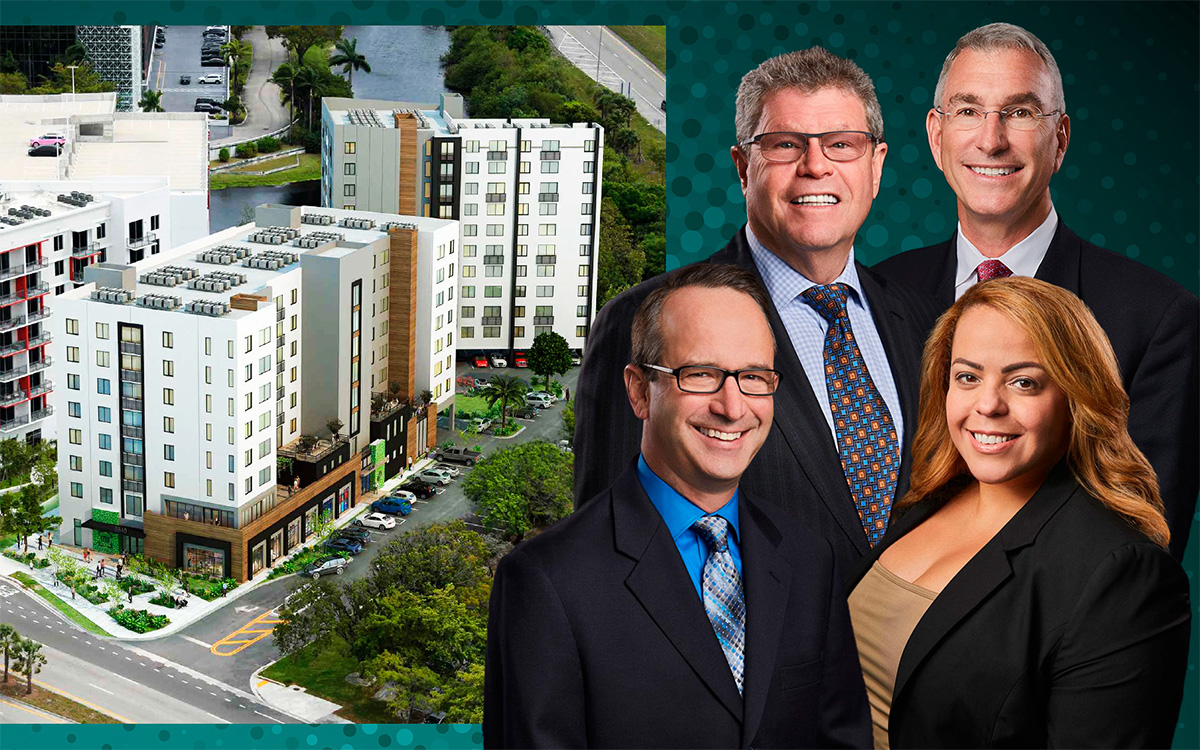
Florida Escalates Fight For Workforce Housing Authority

The Sunshine State’s latest Live Local Act update strengthens zoning preemptions and adds legal muscle, at odds with city governments that invoke home rule protections to resist affordable housing mandates.

After rents and home prices surged during the pandemic, Florida responded in 2023 by passing a law dubbed the Live Local Act to boost affordable workforce housing development with a state funding pipeline of over $700 million.

Although some development projects secured access to the funds, local governments have thwarted efforts when they have been able, peeved that the state overrode local zoning to allow affordable multifamily in areas zoned for other uses.

Obstructionist local municipal efforts have been buoyed by a “not in my backyard” crowd opposed to denser housing.

This tension — pitting state-level initiatives against local forces of resistance — is playing out nationwide as communities grapple with how to provide affordable housing for essential workers while balancing local preferences and planning priorities.

Meanwhile, would-be urban and infill developers don’t have much say in the outcomes of these power struggles. They can either wait on the sidelines – with significant entitlement costs at risk – or step into the fray, where they can get caught in the crossfire.

Florida lawmakers just passed a third update to their Live Local Act. The latest version of the law adopts a more aggressive approach than changes made the prior year, aimed at removing roadblocks. This year’s version closes loopholes that local governments exploited to deny projects and expanded tax exemptions, particularly those on missing-middle housing projects.

Keith Poliakoff, an attorney with Fort Lauderdale law firm Government Law Group, called the legislation Live Local 3.0.

It’s not the final version of Live Local, because it’s still going to be met with major resistance, where municipalities are going to still say, ‘I don’t know what this law means,’” Poliakoff said. The new law, however, is “another attempt to tell municipalities this is a state mandate that you must follow.”

The law clarified provisions in the existing law.

They also added some additional locations where you can build workforce housing as of right,” Poliakoff said. “And they finally put in a term requiring expediting lawsuits. It allows the winner to get up to $250,000 back in attorney fees.”

Live Local Act’s Intent

Rents and home prices had risen rapidly during the pandemic because of a flood of new residents who had moved into the state. Rent growth in some cities frequently had the highest rent growth in the country.

Florida Gov. Ron DeSantis signed the law in March 2023 to increase workforce rental housing and help workers buy homes.

“We want people to live in the community where they are working,” Florida Gov. Ron DeSantis said at the time. And he was particularly focused on teachers, police officers, firefighters, nurses, and service workers.

He noted that the state’s cities and counties need those workers, but it’s difficult to attract them if they must drive an hour or more to work daily.

Local governments were required to allow multifamily and mixed-use residential projects on sites zoned for residential, commercial, or industrial use if at least 40% of the residential units are affordable for 30 years to those earning up to 120% of the area median income.

For mixed-use projects, at least 65% of the total square footage must be used for residential purposes, and the 40% affordable component must be rental units.

Meanwhile, rent growth has slowed considerably because of record-high development. Housing prices have come down, too, because of supply, but also because of higher interest rates putting a chill on buyer interest. Hot markets have turned cold.

Still, the need for affordable housing persists and some projects have managed to get funded. In December, commercial real estate media site Bisnow found that 45 projects across the state received funding since that law first passed. However, 30 of them were existing and received rescue capital to keep them going.

Battling Local Governments

After Live Local’s initial rollout, local governments found ways to kill projects.

“We believe this needs to go to a public hearing,” Poliakoff said of local government thinking. “We don’t understand in the legislation what the word density means. That’s a confusing term. The word height, I’ve never heard that term before. What is FAR (floor area ratio)? That’s a new one.”

In 2024, amendments sought to close loopholes and strengthen the law’s preemption of local zoning, density, and height restrictions for qualifying affordable and mixed-use housing developments.

Changes also included permitting units in a mixed-use project to be for-sale, market-rate units, opening the door to mixed-income developments with condominiums and workforce rental products, and clarifying density bonuses.

Under the original law, qualifying projects with at least 40% of units set aside as affordable for 30 years were permitted at the highest currently allowed density for residential use anywhere in the municipality or county, as defined by local land development regulations.

The 2024 changes explicitly state that the Live Local Act does not preclude projects from also receiving local development bonuses for density, height, or floor area ratio if they qualify under local rules. If a Live Local project qualifies for a local bonus (for example, it provides additional affordable units or donates land), the bonus must be approved administratively, and no further action by local boards or commissions is required.

Those changes still didn’t deter local governments. “We don’t know what a bonus is,” Poliakoff. “We don’t know what a variance is. We don’t know what a special exception is, and it’s now led to more and more litigation concerning what the Act requires.”

Before the 2024 revisions, Whitman Family Development, owner of Bel Harbour Shops in ritzy Bel Harbour village, sued last January, claiming the village isn’t complying with the Live Local Act.

The developer alleged that the village was attempting to scuttle a plan to override local zoning and build 600 luxury residential units, 70 hotel rooms, and more than 45,000 square feet of retail space. To qualify for Live Local, 40% of the units would be workforce housing. It would be five times higher than Bal Harbour’s current height restrictions if built.

Bal Harbour is fighting the lawsuit but lost a bid last September to have the lawsuit dismissed. In November, the village denied the developer’s application based on a technical review. The conclusion was that the village’s height and use prohibitions were unaffected by the Live Local Act.

Poliakoff sued the city of Hollywood in January on behalf of Condra Property Group after the denial of its proposed beachfront 17-story mixed-use tower that included affordable housing. The city said it would be too tall.

The developer argues it should be allowed because the Margaritaville Hollywood Beach Resort, opened in 2015, rises 18 stories, and that set the benchmark. Both sides argue that the other has misinterpreted the provisions of the Live Local Act.

Poliakoff said the “reality is, these municipalities are not going to win their cases.”

The fights will continue, however. Fort Lauderdale may be typical of the angst among neighborhood advocates and politicians over the Live Local Act mandates.

Community meetings earlier this year reportedly were testy, with anger-filled comments. Fort Lauderdale Mayor Deal Trantalis told the South Florida Sun Sentinel that the Live Local law doesn’t work for Fort Lauderdale or any city.

(State legislators) have violated our home rule by taking away our ability to enforce our local zoning laws,” Trantalis said.

That comment mirrors what local government officials, from California to North Carolina, have said when states have passed laws to preempt local zoning.

Battles will continue to rage as state governments try staunching NIMBYism to make housing development easier and more plentiful, leading to more affordable housing that addresses a national – and local – shortage.

Much of it will play out in courts. That, of course, will take time and impede urgently needed progress toward developing new workforce housing in the Sunshine State.

Article Link: Florida Escalates Fight For Workforce Housing Authority
Author: Richard Lawson

Pinnacle advances 196-unit Live Local affordable housing project in Fort Lauderdale

Developer plans 96 workforce units at Pinnacle at Cypress, along with 100 units for seniors

Pinnacle Housing Group and its partners advanced its plan to build a 196-unit Live Local Act affordable housing complex with separate buildings for seniors and workforce tenants in Fort Lauderdale’s Cypress Creek area.

The Fort Lauderdale City Commission last week approved a $640,000 loan commitment to help the Miami-based developer finance construction of 96 rent-controlled, workforce housing units for the second phase of its Pinnacle at Cypress project.

The city’s loan is contingent on Pinnacle qualifying for an allocation of 9 percent Low-Income Housing Tax Credits from the Florida Housing Finance Corp. which the company would provide to institutional investors in phase two of the Pinnacle at Cypress development.

Last year, the city commission approved a contingent $640,000 loan for phase one of Pinnacle at Cypress, which will be 100 apartments for seniors. But Pinnacle subsequently failed to qualify for a 2024 allocation of 9 percent tax credits. Last week, the commission reassigned the $640,000 loan commitment to phase two of the affordable housing development.

Though Pinnacle did not obtain 9 percent low-income housing tax credits last year, the developer landed other types of financing for phase one of Pinnacle at Cypress, including a State Apartment Incentive Loan (SAIL). In addition, “We’ve gotten a bond inducement from the Broward County Housing Finance Authority, and we’re in the process of applying now for some additional Broward County gap financing,” Timothy Wheat, a partner of Pinnacle, told The Real Deal.

The developer will break ground in the first quarter of 2026 for construction of 100 affordable apartments for seniors in phase one, Wheat said. Pinnacle will complete construction of the two-phased development in June 2028, according to a conceptual timeline the developer submitted to the city.

The total cost of the development is nearly $90 million, he said.

Eligibility to become a tenant of Pinnacle at Cypress is based on area median income. On average, tenants of the senior and workforce housing units will earn 60 percent of AMI. AMI is $81,900, according to the Broward Housing Council.

Pinnacle is led by partners Louis Wolfson III, David Deutch, Wheat and Coraly Rodriguez and Hugo Pacanins.

The 1.8-acre site of Pinnacle at Cypress at 6250 North Andrews Avenue is owned by Poliakoff Becker & Strietfeld LLP, led by Fort Lauderdale attorney Keith M. Poliakoff. He said that he and other owners of the site entered a partnership with Pinnacle to develop the affordable housing complex.

Poliakoff also said the development at Cypress Creek will qualify for streamlined city approval by city staff under the state’s Live Local Act, which encourages commercial-industrial multifamily developments with an affordable housing component in areas not zoned for residential property.

“This development will move much quicker than other affordable deals, because it generally does not require board approvals,” Poliakoff said.

Article Link: Pinnacle advances 196-unit Live Local affordable housing project in Fort Lauderdale
Author: Mike Seemuth

Top Palm Beach County professionals, business people on the move for the week of Feb. 9

In our weekly list of business people on the move, we highlight Palm Beach County professionals who are making a difference. These are people from across the spectrum of public and private endeavors, those working in charities, court houses, private practices and beyond. They are moving up within their industry, advancing their careers and standing out for their services within our community.

Here are this week’s professional standouts:

Delray housing groups announce commission leaders

Ivan Gomez
Provided By The Delray Beach Housing Authority

The Delray Beach Housing Authority recently announced the re-appointment of Ivan Gomez as chairman and newly appointed Robert Cantwell as vice chairman of the board of directors. The authority is governed by seven commissioners, each appointed by the city commission for a term of four years. The organization is dedicated to improving the quality of life for low- and moderate-income families, and providing the opportunity for self-sufficiency by offering safe, quality housing. Additionally, The Delray Housing Group, Inc. has announced the appointment of Cantwell as chairman and Noah Hale as vice chairman of its board of directors. The group’s mission is to provide affordable housing opportunities, promote economic development and be a catalyst for community revitalization.

Robert Cantwell
Provided By The Delray Beach Housing Authority

Noah Hale
Provided By Delray Beach Housing Authority

Palm Beach Opera director named to prestigious post

Joanna Latini
Provided By Palm Beach Opera

Palm Beach Opera’s director of resident artist programs, Joanna Latini, has been selected for the prestigious 2025 Opera America Leadership Intensive, a program that identifies and develops emerging leaders in the opera industry. Latini, a champion of young artist development and an advocate for creating transformative, inclusive spaces in opera, is one of 18 participants selected from around the world. In its 10th year, the program exemplifies Opera America’s long-standing commitment to identify and support the professional growth of leaders who will help move opera forward for years to come.

Palm Beach Gardens attorney elevated to principal at firm

Matthew N. Turko
Provided By Cummings & Lockwood

Cummings & Lockwood has announced that Matthew N. Turko, an attorney in the firm’s private clients group and based in their Palm Beach Gardens office, has been elected to principal, effective Jan. 1. Turko focuses his practice on sophisticated estate planning. He also advises clients on federal income, gift, estate and generation-skipping transfer tax issues.

Community Foundation adds five members to philanthropy council

The Community Foundation for Palm Beach and Martin Counties, a nonprofit organization that leads partnerships with donors, nonprofit organizations, and community members to solve the region’s chronic and emerging issues, recently announced five new philanthropy advisory council members. The council is a collaborative group of trusted advisors providing Community Foundation with leadership and guidance to best serve their clients and the community. The new members are: Matthew Cohen, principal of Prodos Capital Management LLC in West Palm Beach; Elizabeth Marshman, associate vice president, trusts, estates and private clients at Freeman’s/Hindman in Palm Beach; Robert D’Angelo, CFA, director, wealth advisor at Cresset in West Palm Beach; Genevieve George, senior financial advisor at Hamilton Capital in Palm Beach Gardens; Samantha Vassallo, managing director and Wealth Advisor at Truist Bank in Boca Raton.

Matthew Cohen
Provided By Community Foundation For Palm Beach And Martin Counties

Elizabeth Marshman
Provided By Community Foundation For Palm Beach And Martin Counties

Robert D’Angelo
Provided By Community Foundation For Palm Beach And Martin Counties

Genevieve George
Provided By Community Foundation For Palm Beach And Martin Counties

Samantha Vassallo
Provided By Community Foundation For Palm Beach And Martin Counties

Builders group COO named to county audit committee

Associated Builders and Contractors Florida East Coast is proud to announce that the Palm Beach County Commission has unanimously appointed chief operating officer Sonny Maken to the Palm Beach County Internal Audit Committee. The Internal Audit Committee plays a crucial role in providing oversight and ensuring transparency in the financial operations and compliance of Palm Beach County. The committee assists the board of county commissioners and county administration in maintaining accountability through effective performance audits, reviews, and recommendations.

Sonny Maken
Provided By Associated Builders And Contractors Florida East Coast

Former Delray Beach vice mayor joins law group

Jordana L. Jarjura
Provided By Government Law Group

Government Law Group recently announced the addition of veteran land use and government relations attorney Jordana L. Jarjura as Of Counsel. With more than two decades of experience representing developers, navigating complex government contracts, and holding leadership positions in both private and public sectors, Jarjura brings a unique depth of insight and expertise to the firm. GLG is a leading South Florida firm specializing in solutions for government relations, municipal law, land use and zoning, development, code enforcement, government contracts, bid protests, boutique complex litigation, and other issues specific to Florida government. Jarjura’s background includes roles as vice mayor of the Delray Beach.

If you are looking for more insight into the movers and shakers operating in the Palm Beaches, subscribe to our real estate newsletter, The Dirt, keep an eye out for stories and perspective from veteran reporters Kimberly Miller and Alexandra Clough. If you have an announcement for Business People on the Move, please send it to Pbbusiness@pbpost.com.

Eddie Ritz is a journalist at The Palm Beach Post, part of the USA TODAY Florida Network. You can reach him at eritz@pbpost.com. Help support our journalism. Subscribe today.

Article Link: Top Palm Beach County professionals, business people on the move for the week of Feb. 9
Author: Eddie Ritz

Developer’s plans for high-rise on Hollywood Beach were rejected. Now they are suing

New York-based Condra Property Group wants to build an 18-story tower along Hollywood Beach. Courtesy of Condra Property Group

A lawsuit filed recently against the City of Hollywood could determine how developers and municipalities handle Florida’s Live Local Act, a controversial law meant to spur more affordable housing.

New York-based developers Condra Property Group sued the city Jan. 10 after it denied the group’s request to build a 17-story mixed-use project, with affordable housing units, restaurants and a parking garage, under the Live Local Act. If approved, the property would be the second tallest building north of Hollywood Boulevard after the Margaritaville Hollywood Beach Resort.

Condra says its proposal was designed in accordance to the Live Local Act, a 2023 law which offers tax breaks to developers to build supersize projects with apartments dedicated to affordable housing. Under the law, developers can override local building controls, like zoning, density and height limits, so long as their projects deliver a certain amount of affordable housing units. While the proposed Condra building would be eight inches shorter than Margaritaville, the City of Hollywood denied the request, claiming that Margaritaville cannot be used as a height benchmark because the resort was built under special circumstances.

“The denial was based on the applicant’s interpretation of the legislation, specifically regarding the applicability of height requirements to the site. The City did receive the suit and is reviewing accordingly,” city spokesperson Joann Hussey said in a statement to the Herald.

New York-based Condra Property Group wants to build an 18-story tower along Hollywood Beach. Courtesy of Condra Property Group

The lawsuit has greater implications beyond Hollywood, said Keith Poliakoff, an attorney representing Condra. This is the first time a Live Local Act-related lawsuit involving height restrictions has been filed.

“There are numerous developers who are waiting in the wings, waiting to confirm that the court is going to support Live Local and agree with the position of the developer here that the height of the Margaritaville is the benchmark that the city has set itself and that it can be matched by others,” Poliakoff said. “To get a project to the point where we’re at cost over a million dollars, so there are a lot of developers who are waiting to see the outcome here before making that same expenditure.”

Keith Poliakoff is an attorney representing New York-based developers Condra Property Group. His client is suing the City of Hollywood over a denied Live Local Act request to build a mixed-use development. Courtesy of Government Law Group

Considered to be a “historic” piece of housing legislation meant to help ease the housing crisis for low-income Floridians, the Live Local Act led to disputes between developers, residents and local governments within its first year. Outraged local officials complained of losing control over planning. Reports showed that the law allowed developers to avoid paying millions in local taxes without providing much affordable housing. And communities argued that the law’s definition of “affordable” is far-fetched and out of touch.

A similar height issue unfolded in Miami Beach when the owners of the iconic Clevelander Hotel and Bar announced in September 2023 they wanted to replace the property with a 30-story tower, with 40% of units under the higher range of what the law considers to be “affordable.” The mayor called it “worst idea ever.” The owners amended the proposal to 18 stories.

But this new lawsuit may give developers the upper hand if the court rules in Condra’s favor.

Will this suit change Hollywood’s skyline?

A towering structure that dwarfs the quaint, squat retro hotels of Hollywood, Margaritaville was opened in 2015 after it was built on city-owned land under a 99-year lease. The buildings surrounding Margaritaville and what would be Condra’s project are zoned to be maximum five stories tall, according to the Hollywood Zoning Map.

The developers own 11 buildings between Oklahoma and Nebraska streets between Ocean Drive and the Broadwalk. Initially, the plan was to build luxury hotels, but backlash from residents squashed that idea, Mark Drachman, one of the Condra co-owners, told the Herald last year. The Live Local Act encouraged the developers to change course.

Condra proposed a 17-story mixed-use development with 282 residential units, including 114 units set aside for affordable housing. The project would include three buildings: a 183-foot mixed-use residential tower, a 6-story parking structure and 2-story commercial beach club. According to the lawsuit complaint, the finished product would be valued at $80,000,000. Condra has spent $1 million in fees hiring architects and other professionals to design the project to be in accordance with the Live Local Act, the complaint says.

South view from the public parking building located at North Ocean Drive and Nebraska Street of the blocks in Hollywood Beach, on Tuesday, July 23, 2024. This is where an 18-story building could potentially be built along Hollywood Beach under the Live Local Act. Pedro Portal pportal@miamiherald.com

In June 17, 2024, the developers submitted for the project’s final approval, according to the complaint. The lawsuit alleges that the city hired a law firm to lobby state lawmakers to change the language of the law, specifically when it comes to height matching.

“Instead, the City continued to delay final approval, while working unsuccessfully behind the scenes to change state law,” the lawsuit says.

The Live Local Act says that a municipality may not restrict the height of a proposed development below the highest currently allowed height for a commercial or residential development within one mile of the proposed development. But the law also says that existing buildings that have “received any bonus, variance or other special exception for height” cannot be used as a height benchmark for proposed Live Local Act developments.

On Aug. 24, 2024 the city denied the developers’ request, arguing that Margaritaville is located within a “specialized zone” that allows the City Commission to determine building height “on a case-by-case basis”

The lawsuit argues that the city misinterpreted the law and that Margaritaville was built “without receiving any bonus, variance, or special exception from the City.”

A view of Margaritaville Hollywood Beach from the Broadwalk. Shannon Kaestle Miami Herald

“The city will do everything in its power to prevent height on the ocean,” Poliakoff said. “Although they failed at the Florida Legislature level, they are forcing the developer to take this to court to tell the city, ‘What’s good for you has to be good for everyone.’ If you’re approving the height of the Margaritaville hotel, you have to approve it for others.”

Hollywood Mayor Josh Levy has been ready for this fight since last summer, when he told the Herald that the law clearly prevents developers from using Margaritaville as a height standard and that he was prepared to prove it in court, if necessary.

“We have no doubt that the courts would agree with the plain meaning of the law and our code and uphold Hollywood’s height limits for Hollywood Beach,” he said.

Article Link: Developer’s plans for high-rise on Hollywood Beach were rejected. Now they are suing
Author: Amanda Rosa

Condra sues city of Hollywood over denial of Live Local project

Developer proposed 17-story tower on Hollywood Beach, citing height of nearby Margaritaville

Rendering of Live Local project, Condra’s Allen Konstam and Mark Drachman (Linkedin, Getty)

The developer of a planned mixed-use project in Hollywood Beach is alleging the city illegally denied its Live Local Act application, according to a lawsuit filed this week.

The complaint marks another example of local governments clashing with developers over the state’s new workforce housing legislation, signed into law by Gov. Ron DeSantis in 2023 and amended last year. The law incentivizes developers with additional density and height, tax breaks and other sweeteners if they set aside a portion of their residential units to be designated workforce housing for a period of at least 30 years.

Affiliates of New York and Miami Beach-based Condra Property Group, led by Allen Konstam and Mark Drachman, sued the city this week in Broward County Circuit Court, alleging that the city delayed approving the project as it was “working unsuccessfully behind the scenes to change state law,” the lawsuit states.

Condra submitted an application for a 17-story, mixed-use project with 282 condos and apartments and about 35,000 square feet of commercial space. The $80 million project is planned for an assemblage at 2115 North Ocean Drive, on Oklahoma, McKinley and Nebraska streets. It calls for a 183-foot tower, a two-story beach club and a six-story parking garage.

Forty percent, or 114 units, would be set aside for tenants earning at or below 120 percent of the area median income. The AMI in Broward County is $88,500.

According to the lawsuit, Condra said the city knew the project met all the requirements of the Live Local Act, but it hired the law firm Gray Robinson to lobby state legislators regarding a section of the law that discusses project height, so that the height of a nearby resort couldn’t be used as a benchmark.

Hollywood approved every other aspect of the project except for the height. A city spokesperson said the city received the lawsuit on Wednesday and “will be reviewing [it] accordingly.”

Attorney Keith Poliakoff, who represents Condra in the complaint, said the only remedy left for Condra was to sue. The developer spent more than $1 million to plan and design the Hollywood Beach project to fit the Live Local Act’s guidelines, Poliakoff said.

Attorney Keith Poliakoff (The Government Law Group)

Live Local mandates that the local municipality may not restrict the height of a proposed project below the tallest currently allowed commercial or residential building within 1 mile of the project. That doesn’t include buildings that have been granted variances, bonuses or other special exceptions.

Condra’s proposed height is based on Margaritaville Hollywood Beach Resort, which is eight inches taller and 17 stories high. In the city’s rejection letter provided in August, city staff said Margaritaville “is not an allowable height benchmark” because the building is in a governmental use zone, and projects located in these zones are approved “through a specialized process.”

How a judge interprets the law will set a precedent for how these projects are approved in Hollywood, Poliakoff said. He said the city hasn’t explained its defense.

“The state of Florida has preempted them and has told them you must approve this project,” Poliakoff said. “We’re not trying to harm the city. We’re just trying to say ‘approve what’s allowed under the law.’”

Article Link: Condra sues city of Hollywood over denial of Live Local project
Author: Katherine Kallergis

Developer Sues Hollywood To Force Approval Of Beachside Tower Under Live Local Act

A New York-based developer is testing the reach of Florida’s Live Local Act, suing the city of Hollywood to advance its planned 18-story mixed-use complex.

Hollywood Technical Advisory Committee Condra Property Group’s plans include 137 condos and 91 rent-restricted apartments.

Condra Property Group filed a lawsuit this week in Broward County circuit court against the beachside city outside Fort Lauderdale after it denied Condra’s proposal to build a 183-foot-tall tower. The project is above the height maximum for the site’s zoning, but under the provisions of Live Local, the city must approve the project if it offers at least 40% of its units as affordable or workforce housing.

The suit asks the court to overturn the project’s rejection and allow the development by right, potentially setting an early precedent for project approval under the Live Local Act’s provisions.

“We feel very confident that a circuit court judge will review this matter quickly and see it for what it is, which is a desperate attempt from the city to prevent height on the barrier island,” said Keith Poliakoff, an attorney at Government Law Group representing Condra in the suit.

The case hinges on the relaxation of height restrictions for developments built under Live Local Act, which allows developers to tie the maximum height of their project to the tallest allowed height for a commercial or residential development within a mile of the project site.

Condra is seeking to use the 183-foot-tall Margaritaville Hollywood Beach Resort to build to nearly the same height at its 2.4-acre assemblage located a few blocks away at 2007 N. Ocean Drive. Condra assembled the site for a combined $13M in January 2022, property records indicate.

The proposed $80M development would include 137 condos, a parking garage and ground-level retail space. To qualify for the height bonus under the Live Local Act, the proposal sets aside 91 apartments priced for tenants making no more than 120% of area median income, which would cap rents for a studio unit at around $2,200 per month.

A spokesperson for the city of Hollywood acknowledged that it had been served with the suit Wednesday but declined to comment further.

In an Aug. 29 letter denying the application, city officials disputed Condra’s interpretation of the Live Local Act. Officials argued that the Margaritaville resort was not a valid building to benchmark the maximum allowable height for a development because it was built on a site zoned for government use.

Development plans for parcels with government use zoning are approved on an ad hoc basis and therefore cannot be used to set the maximum height for a Live Local project, the denial letter said.

“The approval of any development in the GU zone is done through a specialized process to set site-specific zoning and land use controls that would not otherwise apply to other parcels,” the letter states. “To date, the applicant has not provided a compelling argument for the legitimacy of height.”

Circuit Court Judge David Haimes is being asked to overturn the denial and allow the Margaritaville to serve as the allowable maximum height despite its zoning status.

Condra first proposed a 10-story luxury hotel at the property site in 2022. But it was denied by the city because of that project’s size. After the Live Local Act became law in July 2023, the developer instead opted to incorporate the law’s workforce housing requirements to allow it to build even taller.

Under the law’s provisions, projects that set aside at least 40% of units for residents making no more than 120% of area median income are granted height, density and other zoning bonuses for their projects.

Condra Group’s proposal relies on the Live Local Act to secure its maximum height. Other developers across South Florida have been butting heads with municipalities over not only the height rules but also overall project density.

Jesta Group and Miami Beach are locked in a battle over the redevelopment of the Clevelander South Beach hotel and bar into an 18-story tower along a historic portion of beachfront art deco properties, many of which fall under historic preservation rules.

A few miles north, the owner of the Bal Harbour Shops is suing its namesake village in an effort to force the approval of more than 500 apartments across four towers at the property.

The Bal Harbour suit, filed by Whitman Family Development, was the first major test of Live Local to be filed, but Poliakoff said its broader scope meant it’s unlikely to be settled before the Condra suit.

“We expect this to be a fairly simple and quick case, and one that the judge will determine by simply looking at the law and realizing that the law does not allow the city to prevent the height on this development,” Poliakoff said.

Contact Matt Wasielewski at matthew.wasielewski@bisnow.com

Article Link: Some millennials are moving into neighborhoods with built-in golf and yoga that let them live like carefree retirees
Author: Matt Wasielewski, National

Cost Concerns Keep Real Estate Atop Florida Policy Agenda

A New York developer has hit Hollywood, Florida, with a state court suit accusing the city of improperly interpreting the state’s Live Local Act to block the developer’s proposed 17-story beachfront project after falling short in efforts to get the affordable housing law changed.

The 2023 law, which offers developers entitlements to build bigger and with limited local control in exchange for including a percentage of affordable housing units in projects, has generated considerable buzz, but also a number of disputes over local governments’ implementation. The current controversy landed on Friday in the Seventeenth Judicial Circuit, brought by developer Condra Property Group, which sued Hollywood over the denial of its site plan approval for a mixed-use project on Hollywood Beach over height concerns.

Here, Law360 Real Estate Authority looks at ways Florida public policy may shape real estate in 2025.

Affordable Housing

The entire nation has been grappling with a housing affordability crisis over the past few years, but for Florida, the situation has been magnified by an influx of people to the state and a crisis over property insurance rates and availability.

The Legislature in 2023 passed the Live Local Act in an attempt to address that reality. In addition to pouring more money into affordable housing funds, the law also aimed to incentivize development of affordable housing units through tax breaks and zoning entitlements that expanded the eligible location and size of projects while preempting some local review.

The law, which received significant adjustments in 2024 regarding building density and parking requirements for properties near transit, has caught the attention of even market-rate developers, who say the available incentives can make the difference in projects making financial sense.

“They’ve embraced the Live Local Act,” said Iris Escarra, a shareholder at Greenberg Traurig LLP in Miami and co-chair of the firm’s land use practice, noting that she and her colleagues were in the midst of doing modeling on eight or nine projects to gauge its applicability and have seen developers choose to pursue its benefits over other incentive programs.

But uneven application across different local jurisdictions, including strong resistance in some places, has others questioning its usefulness.

“I think every developer is interested. It’s just, how real is it?” said Vivian de las Cuevas-Diaz, a Miami-based partner and the deputy section leader of the real estate practice at Holland & Knight LLP. She noted that while some local governments have publicly voiced support for the law, in practice, they have made it very difficult for applicants to advance projects.

Government Law Group co-founder Keith Poliakoff said that while there have been applications filed to apply the Live Local Act throughout the state — and there is litigation pending on some of those — it is hard to find any developments built based on the statute because of the local pushback.

“Although everyone would like to utilize it to expand and to increase the amount of workforce housing throughout the state, the local governments have worked in so many ways to water down the bill and to prevent its applicability that the current utilization of Live Local is somewhat useless,” he said.

Developer Henry Torres, president of Miami-based Astor Cos., told Law360 Real Estate Authority that because of shifting promises and unexpected hurdles, such as the city of Miami requiring developers to present residents’ income tax returns to qualify for tax breaks, he expects to drop plans to pursue Live Local Act benefits for his next multifamily project, Havana Enclave in the Little Havana neighborhood.

“I’m going to go out and do this building market, because they have not finished figuring out how they want to run this thing. The state mandates one thing, the cities do another, and we’re in the middle,” he said. “It’s uncomfortable. The businessman who’s making the concession to the people is put in a position where he thought he was going to make X and now he’s making Y, and we’re behind the eight ball.”

It is common for such a far-reaching, complex piece of legislation to require some tweaking, and more could come to the Live Local Act in 2025. Rep. Vicki Lopez, R-Miami, one of Live Local’s major proponents, told Law360 in an interview earlier in the fall that some revisions may be needed for how local jurisdictions are grouped to measure whether they have a deficit of affordable housing and must offer the law’s tax breaks. And de las Cuevas-Diaz said a clearer process that everybody can follow is needed, including to move the needle on lenders feeling comfortable to finance these projects.

Bill Sklar, a partner at Carlton Fields, said he expects the Legislature to consider acting to limit local governments from imposing moratoria on development, a step some have taken to counter the preemptions in the Live Local Act.

The design of the Live Local Act also has proved more conducive to adding units at the higher end of the affordable range, what is typically called “workforce housing.” Lopez said that she expects to explore pursuing additional affordable housing legislation outside the Live Local paradigm in an effort to target lower income residents and to get projects to market more quickly, possibly through incentives for building renovations and rehab as opposed to ground-up development. Among the first bills filed for 2025 was Senate Bill 84, from Sen. Jay Collins, R-Tampa, which would entitle construction of housing on farms for legally verified agricultural workers. The Legislature unanimously approved a similar measure last year, but DeSantis vetoed it, saying he had concerns it lacked sufficient language to prevent housing of undocumented immigrants.

Condominium Reforms

Affordability has also become a major focal point regarding recent reforms to laws governing the state’s more than 27,000 condominiums developments, which saw a key deadline arrive at the end of 2024.

Acting in response to building safety concerns after the deadly June 2021 partial collapse of the Champlain Towers South condominium tower in Surfside that killed 98 inhabitants, the Legislature passed a series of laws requiring that condos over three stories and at least 25 to 3 years old, depending on proximity to the coastline, obtain structural inspections and reserve studies and start collecting reserves for certain structural components’ eventual repair or replacement.

The recent legislation set a deadline of Dec. 31, 2024, for buildings to obtain those reviews and required the collection of reserves to start in any budget approved after that date.

Concerns soared in 2024 as stories spread about buildings receiving reports calling for costly repairs or large reserves that would require their associations to hike up monthly maintenance fees and impose special assessments ranging into six figures.

With condos traditionally a popular choice among retirees on fixed incomes or younger residents before they might start a family and move to a roomier house, condos had become one of the more affordable housing options on the market, but these events turned that notion on its head. Fears over how residents will be able to cope with these new financial burdens prompted calls — including from DeSantis — for the state to take action.

Outgoing legislative leadership declined to call a special session, and the incoming leaders said they preferred to take the time to look closely at the data during the annual two-month session.

“The question shouldn’t be, ‘When?’ The question should be, ‘What?” Perez told the press after his introductory speech. “What is the solution that people are offering to the issue before condos?’ It’s an issue we’ll be discussing during session.”

On Monday, the governor pushed back on his fellow Republicans’ approach and called on lawmakers to come up with some relief for unit owners at a special session opening Jan. 27 that he said will be focused primarily on readying the state to support what are expected to b dramatic immigration initiatives coming down from Washington when President-elect Donald Trump returns to the White House.

“The Legislature should not be doing anything that’s going to cause someone to flee because of an artificial mandate,” DeSantis said of the need for swift action on condos.

The governor said he did not think there were any agreements yet on what that should be, however, and the speaker and Senate president said it is a complex issue that should be addressed during the regular session.

One idea could be for the state to issue or back low-interest or no-interest loans, similar to a smaller-scale Condominium Special Assessment Program implemented by Miami-Dade County in response to the new reforms. Carlton Fields’ Sklar noted that a Florida Bar task force on condo safety policy that he led in the wake of the Champlain Towers South collapse had supported allowing a longer phase-in period for building up recommended reserves. He also said there are questions about the potential for pooling reserves saved for other purposes.

For some condominiums, especially those built 40 or 50 years ago, it may prove financially unfeasible to make the necessary repairs and collect reserves needed to come into compliance, Government Law Group’s Poliakoff said. In that case, terminating the association and selling the property to a developer may be the only or best option.

“I think that if the law stays as is, you will see multiple condo associations throughout the state seek disbandment and to sell off their properties to enable their owners to cash out,” he said. But a March 2024 ruling from the state’s Third District Court of Appeal cast a chilling effect on terminations by temporarily blocking Two Roads Development’s efforts to redevelop the Biscayne 21 Condominium in Miami via what had been considered an acceptable practice of developers acquiring enough units in a building to amend the rules and then voting for a termination. Developers, condo owners and lawyers are waiting to see how the court rules on Two Roads’ motion for a rehearing.

Property Insurance

Florida’s long-troubled property insurance market showed some encouraging signs in the past year, with national carriers Progressive and State Farm committing to staying in the state, a number of carriers filing stable or decreased rates, decreases in reinsurance costs, and Citizens Property Insurance, the state’s insurer of last resort, getting its policy count below 1 million through “takeouts” by private carriers.

“Things are looking up, actually,” Fred Karlinsky, a shareholder and chair of Greenberg Traurig’s Global Insurance Regulatory and Transactions Practice Group, said in December. “The legislation that the Legislature and the governor put in place at the end of 2022 and beginning of 2023 regarding litigation reform have really made differences. Last year for the first year in the better part of a decade, insurers in Florida made money. Last year and again this year, we’re seeing rates either stabilizing or actually lowering.”

But high rates and tight availability remain major concerns for owners on both the residential and commercial sides, as well as for developers. While the state dodged worst-case scenarios in terms of the impact from Hurricanes Helene and Milton in 2024, experts have told Law360 that policy costs are likely to go up as a result of these two major storms, and Karlinsky noted that other global catastrophic events, such as the wildfires ravaging the Los Angeles area, could exacerbate the situation in Florida. And the perennial threat posed by hurricanes only looks likely to worsen with climate change.

“Florida cannot continue to excel unless this issue is taken care of,” Poliakoff said. “There are too many individuals, too many companies that can no longer afford to be in the state and can no longer afford to build because the property insurance rates have gone out of hand.”

High rates have pushed a number of homeowners and even owners of larger properties in South Florida to “go bare” and self-insure for wind, Poliakoff added, setting up what he called a potentially “disastrous” scenario for the state if South Florida takes a significant hit from a storm.

Critics have also complained that while the reforms the state enacted to reduce insurance litigation in response to fraud and frivolous claims have led to a reduction in cases, the new laws swung the pendulum too far in favor of the insurance industry.

It is possible that the Legislature continues to wait to see how those reforms play out, Karlinsky said, but the incoming speaker did include a line in his opening speech about Floridians not wanting their insurance laws to be written by insurance companies.

A solution must come from the government working with the private sector, because the private sector does not have enough money to do it by itself and the government could provide some financial backing to help Floridians buy more reasonably priced polices than they could otherwise, Oscar Seikaly, CEO of NSI Insurance Group, suggested.

“They can help with the funding, they can come up with the financial engineering so it’s not all the private sector. So it’s a joint effort. That’s what’s going to resolve it or help it,” he said. “Nobody is going to force anyone to remain in the state.”

Poliakoff and others said it will be up to the state, not the federal government, to address the issue.

H.B. 13, filed by Broward County Democrat-turned-Republican Rep. Hillary Cassel, proposes to remake Citizens by requiring it to offer hurricane coverage to all residential properties while having private carriers handle other, less catastrophic risks. A similar proposal failed to gain traction last year, but this version has attracted bipartisan support and been referred to two committees.

Further tweaks to building requirements in parts of the state or programs to incentivize hardening or building more resilient buildings could also help. A pilot My Safe Florida Condo program that will provide free inspections and grant funding for wind mitigation improvements reached capacity in a few days, and $200 million appropriated last year to the existing My Safe Florida Home program was quickly exhausted.

Among the early bill filings, Sen. Ana Maria Rodriguez, R-Doral, has proposed a new tax credit for owners of “resilient buildings” in S.B. 62.

Also Worth Watching

In addition to these three areas, there are several other topics where public policy and Florida’s real estate landscape overlap and that should be interesting to watch in 2025.

In addition to its actions on building safety reforms for condominiums, the Legislature moved in recent sessions to crack down on fraud and misconduct in homeowners and condominium associations, spurred in large part by criminal charges being brought over an alleged multimillion-dollar fraud ring involving board members of a large homeowners association in the Miami suburbs.

Lauren Fallick, a partner at Kluger Kaplan Silverman Katzen & Levine PL, said she expects some immediate impacts on financial transparency from the new law, which took effect July 1, but also some chilling effects on residents’ willingness to serve. She also pointed out that the recent legislation did not include requirements regarding law enforcement’s response to claims.

She expressed doubt that lawmakers will move quickly to address that issue in 2025 but added, “It’s going to be interesting to see the fallout of all of this when you’re seeing people getting arrested on television, and other homeowners associations or condo association owners have made similar reports with backup and nothing happened.”

The Legislature sparked significant controversy in 2023 with its passage of S.B. 264, a bill that restricted property ownership in the state for people “domiciled” in seven foreign countries, including more extensive restrictions regarding China. There is still a lot of interest in the topic, Holland & Knight’s de las Cuevas-Diaz said, including the impact on investment funds that may include members from the restricted countries. But with two lawsuits pending, including one currently on appeal before the federal Eleventh Circuit, lawmakers may wait for the outcome in court.

The controversial trend of investors buying up large numbers of homes to rent has not been addressed yet by the Florida Legislature, but the incoming speaker also commented in his introductory speech that Floridians “want to own their own homes, not be tenants to private equity firms.” When asked about the topic, however, Senate President Albritton said this sounds like a free market issue to him.

Lawmakers may also look to address a number of issues related to land management and development, according to Carlton Fields’ Sklar. He pointed to concerns over municipalities’ liberal invoking of an “extraordinary circumstances” provision to exceed a statutory cap on impact fees for development projects, a desire to reduce inconsistencies between counties’ comprehensive land-use plans and local land development regulations, and development challenges arising from shortages of wetland mitigation credits that developers can purchase to allow building and protect environmentally sensitive lands in certain parts of the state.

The governor’s call for a special session provided a clear indication that federal policy under the incoming Trump administration could also affect Florida through changes on various topics including immigration, labor and the environment, as well as funding made available for areas like transportation. Sources said they expect the state to benefit from the incoming president tapping multiple Floridians, including Sen. Mario Rubio, Rep. Michael Waltz and former Florida Attorney General Pam Bondi for important roles in Washington.

“I think it confirms kind of where Florida sits,” de las Cuevas-Diaz said. “I think it could be in the long run a good opportunity for us. … Even with hurricanes, we still seem to be a state where people want to come. We’ve just got to work through our issues.”

–Editing by Rich Mills

Article Link: Cost Concerns Keep Real Estate Atop Florida Policy Agenda
Author: Nathan Hale

Suit Looks To Overturn Fla. City’s Affordable Housing Denial

A New York developer has hit Hollywood, Florida, with a state court suit accusing the city of improperly interpreting the state’s Live Local Act to block the developer’s proposed 17-story beachfront project after falling short in efforts to get the affordable housing law changed.

The 2023 law, which offers developers entitlements to build bigger and with limited local control in exchange for including a percentage of affordable housing units in projects, hasgenerated considerable buzz, but also a number of disputes over local governments’ implementation. The current controversy landed on Friday in the Seventeenth Judicial Circuit, brought by developer Condra Property Group, which sued Hollywood over the denial of its site plan approval for a mixed-use project on Hollywood Beach over height concerns.

The case may be closely watched by developers and local governments as the court weighs how to factor in existing developments within special zoning districts for comparative purposes when interpreting height and density entitlements provided under the Live Local Act.

Condra, which filed the suit through several development entities, says its project, which is located in the city’s Beach Resort Commercial District zoning area, consists of three buildings: a 17-story, 183-foot tall tower housing 282 residential units — 114 of which will be maintained for 30 years with qualifying affordable rents — and 35,100 square feet of commercial space; a parking garage with ground-level retail space; and a third building with space for two small restaurants or bars and a rooftop pool.

The company says the project is expected to have a value of $80 million when completed and that it spent about $1 million on architects, engineers and other professionals to develop the design for the development in “strict accordance with the Live Local Act.”

In its administrative denial of Condra’s plans, the city rejected the developer’s use of the nearby 183-foot, 8-inch-tall Margaritaville Hollywood Beach Resort as a benchmark to apply a provision in the Live Local Act that says a municipality may not restrict the height of a proposed development that is below the height of the highest currently allowed building within 1 mile of the subject property.

The city asserted that the Margaritaville Resort is not an allowable height benchmark because it is located within the city’s Government Use Zoning District and approval of its design came through a specialized process that triggers an exception in the Live Local Act for buildings that received a “bonus, variance or other special exception for height.”

Condra disputes that interpretation, but also alleges that the city reached that conclusion after stalling the review process for a year while it was unsuccessfully “working behind the scenes” to obtain several amendments to the law to thwart the project.

“The Margaritaville Resort is unquestionably a commercial development, which was developed as of right within the Government Use District, without receiving any bonus, variance or special exception from the city,” Condra contends in the complaint. “Despite plaintiffs raising these objections, the city disingenuously maintains its position that the Margaritaville Resort is not an appropriate height benchmark for the project … and that, therefore, the project as proposed is not in compliance with the Live Local Act.”

According to the complaint, the city’s development services director confirmed that the Margaritaville Resort, which wasn’t developed under the Live Local Act, didn’t collect any bonuses, variances or special exceptions, as defined in the city’s zoning and land development regulations.

Condra lays out in the complaint — through email communications it obtained via a public records request — the city’s efforts to change the state law. The messages show that Hollywood sought to have barrier islands, such as Hollywood Beach, exempted from the scope of the Live Local Act, and when that failed, it then pushed for the 1-mile radius for height provision to be reworded to limit the allowed height of Live Local Act projects to their properties’ same-zoning designation — in this case 65 feet.

After state lawmakers rejected that change, as well, the city issued its formal denial notice to Condra on Aug. 29, according to the complaint.

“Accordingly, the city crafted a new position, nearly one year later, that a commercial development within the city’s Government Use Zoning District somehow equates to it having received a bonus, variance or other special exception for height provided in the [zoning and land development regulations], and that, therefore, applying the privileges of height, density and land use for developments within the Government Use District to a development such as the [Condra] project does not meet the intent of the [zoning and land development regulations] or the Live Local Act,” the complaint said.

“Ironically, and contrary to the city’s administrative denial, the Government Use zoning category actually contains specific procedures to receive a special exception, which was not required for the development of the Margaritaville Resort,” it added.

Condra is asking the court to make several findings overturning the city’s interpretations and that its project should be granted administrative site plan approval to move forward under the Live Local Act’s provisions.

Condra’s counsel didn’t immediately respond to a request for comment on the lawsuit Wednesday.

Joann Hussey, a spokeswoman for Hollywood, said that, since the litigation is pending, she could only confirm that the city had been served with the complaint Wednesday and “will be reviewing it accordingly.”

Condra is represented by Keith Poliakoff, Alan G. Kipnis and Andrew Ingber of Government Law Group.

The case is Astrid 2 LLC et al. v City of Hollywood, Florida, case number CACE25000426, in the Circuit Court for the Seventeenth Judicial Circuit of Florida.

–Editing by Melissa Treolo.

Article Link: Suit Looks To Overturn Fla. City’s Affordable Housing Denial
Author: Nathan Hale

South Florida’s Affordable Housing Fight Heats Up With Broward’s First Live Local Act Lawsuit

A brewing legal battle over a beachfront affordable housing development could redefine how cities across Florida implement the state’s ambitious Live Local Act.

On January 10, a developer filed Broward County’s first lawsuit under the Act, after the City of Hollywood blocked a proposed 17-story mixed-use development that would bring affordable housing to Hollywood Beach.

The lawsuit, filed by Government Law Group attorneys Keith PoliakoffAlan G. Kipnis and Andrew Ingber on behalf of Condra Property Group, challenges Hollywood’s denial of the $80 million project planned for about seven blocks north of Margaritaville Hollywood Beach Resort. At stake is whether cities can use special zoning districts to potentially circumvent the state’s new housing law.

While Hollywood has historically supported affordable housing initiatives, the City rejected this project’s final approval citing height concerns. The developers argue Hollywood is misinterpreting state law by refusing to accept the nearby Margaritaville Resort as a height benchmark for their proposed development.

The case has caught the attention of developers statewide, as its outcome could establish crucial precedent for how municipalities must balance local zoning preferences against Florida’s mandate to expand affordable housing options. With roughly $1 million already invested in planning and design, the lawsuit is seeking declaratory relief to compel the city to honor the Live Local Act.

The situation offers a compelling look at the tension between local control and state authority in addressing Florida’s housing crisis, while highlighting the practical challenges of implementing new housing legislation in desirable coastal areas.

Article Link: South Florida’s Affordable Housing Fight Heats Up With Broward’s First Live Local Act Lawsuit

Developer sues Hollywood over proposed 17-story beachside development

A developer has sued the city of Hollywood, accusing it of improperly blocking a proposed 17-story, $80 million beachside development that would feature affordable housing.

The lawsuit is billed as Broward County’s first lawsuit under Florida’s “Live Local Act,” a state law that offers various incentives to developers to create more affordable housing. The lawsuit alleges the city isn’t easing restrictions in accordance with the Live Local Act.

A city spokeswoman on Wednesday could not immediately comment on the lawsuit, which was filed Friday in Broward Circuit Court.

Considering building limits

Hollywood only allows buildings to be 65 feet tall, or about five stories, on the beach, according to the plaintiffs’ attorney.

But a developer, Condra Property Group, is trying to build a 17-story, mixed-use development with 282 units, including 114 affordable units at or below 120% of the median income. The developer is invoking the “Live Local Act,” which allows certain zoning laws to be bypassed to push for affordable housing.

According to the new lawsuit, the $80 million project was planned for about seven blocks north of Margaritaville Hollywood Beach Resort, the 349-room resort on beachfront land owned by Hollywood.

Margaritaville is 17 stories and eight inches taller, according to the lawsuit.

“They approve projects when they want it for them,” said attorney Keith Poliakoff who is representing the plaintiff Condra Property Group.

The city cannot approve “height for some projects and not others,” Poliakoff told the South Florida Sun Sentinel on Wednesday.

He said the state law allows new projects to match the existing height of other projects within one mile, and he’s asking the court for permission to build. “The city is wrong in prohibiting us from developing this project,” he said.

City staff had ruled that it was not an allowable height because of its location. “To date, the applicant has not provided a compelling argument for the legitimacy of height,” the city’s director of Development Services wrote in an August letter. In the letter, staff writes that Margaritaville Hollywood Beach Resort has different zoning.

Envisioning redevelopment

Poliakoff said there are motels on the site now, which would be torn down for redevelopment.

The proposed project also would include more than 35,000 square feet of commercial use. The project would span several city blocks, and include a two-story beach club and six-story parking garage and rooftop pool.

Poliakoff said it is the first Live Local-related lawsuit in Broward.

In 2023, Gov. Ron DeSantis signed SB 102, also known as the “Live Local Act,” into law. It was a sweeping law that, in part, aimed to remove certain zoning restrictions to push more affordable housing.

Live Local allows developers to override local laws to build units in commercial and industrial areas as long as 40% of the units are affordable. It allows working around local zoning codes that include development’s height, density and use to build new housing, intended to accommodate working people who can’t afford market rate homes.

According to Broward County, the area median income for the county currently is $89,100.

Lisa J. Huriash can be reached at lhuriash@sunsentinel.com. Follow on X, formerly Twitter, @LisaHuriash

Article Link: Some millennials are moving into neighborhoods with built-in golf and yoga that let them live like carefree retirees
Author: Lisa J. Huriash